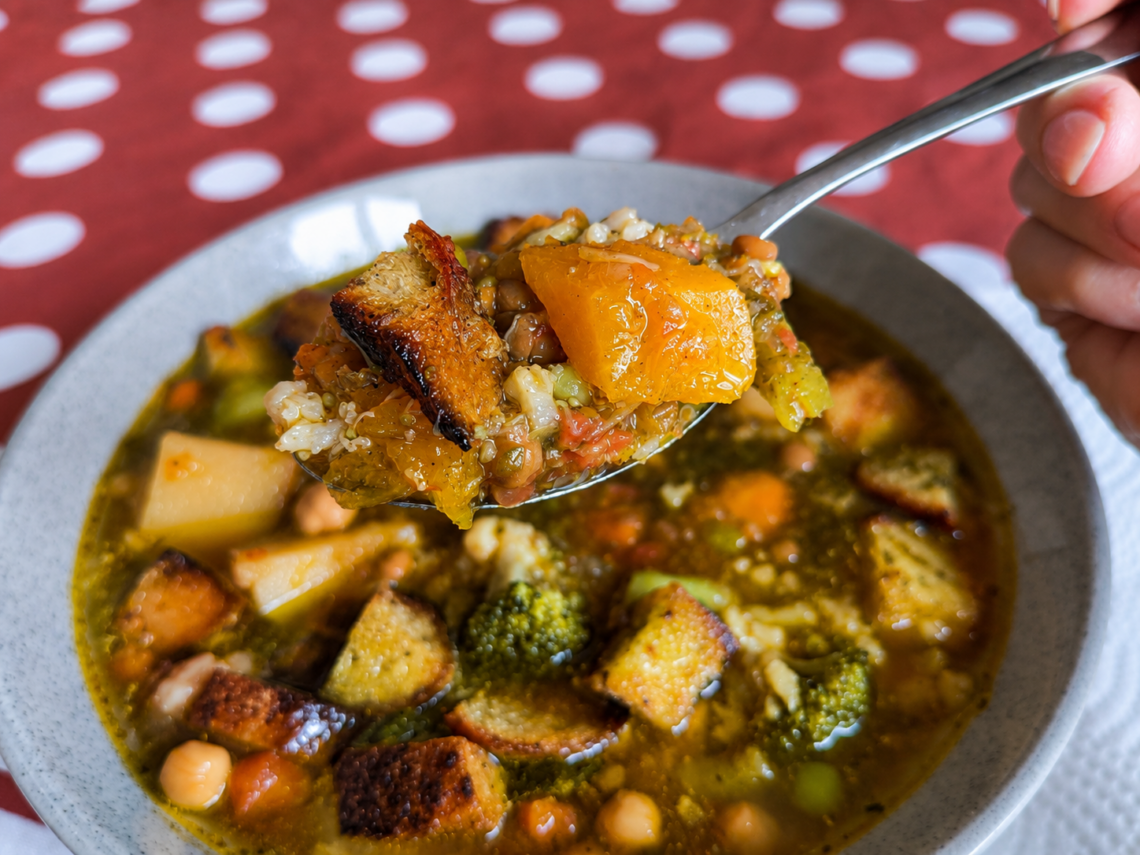
Minestrone
When I think of a wintery, comforting warm soup, the first dishes that comes to mind is minestrone.
Vegetables form the base, legumes for substance, whole grains for energy, and good fats like Olive oil to complete the dish. Everything works together, creating something balanced, satisfying, and deeply nourishing, but more than that, it is practical. Minestrone has always been one of those recipes that changes with the seasons, lighter and fresher in warmer months, richer and more comforting as the weather cools. It takes on the colours, flavours, and rhythm of what is available, adapting naturally without needing strict rules.
“Dentro il minestrone c’è tutto.”
(In Minestrone, there is everything.)
The habit of putting a big pot on the stove, adding what you have, and letting it slowly come together, over time, shaped a dish that looks different in every region, every home, every season. The word minestrone itself comes from minestra, which simply means “soup” in Italian. The suffix -one gives it a sense of abundance, something generous, not just a light broth, but a meal in itself. Its origins are deeply rooted in cucina povera, in a time when meat was not eaten every day, meals were built around what the land could provide: vegetables, legumes, and grains. Minestrone became a natural expression of this, a way to gather what was available and turn it into something complete.
In the north of Italy, you might find versions enriched with rice or barley, sometimes thicker, almost like a stew. In Lombardy, minestrone often includes beans, potatoes, and sometimes finished with a drizzle of olive oil or a touch of cheese. In Liguria, it takes on a completely different character, often finished with pesto, fresh, aromatic, and vibrant. Moving towards central Italy, you find simpler versions, more focused on vegetables and legumes, sometimes with farro. In the south, minestrone becomes lighter and brighter, often built around tomatoes, courgettes, and whatever grows easily in warmer climates.
The Nonna Safety Net
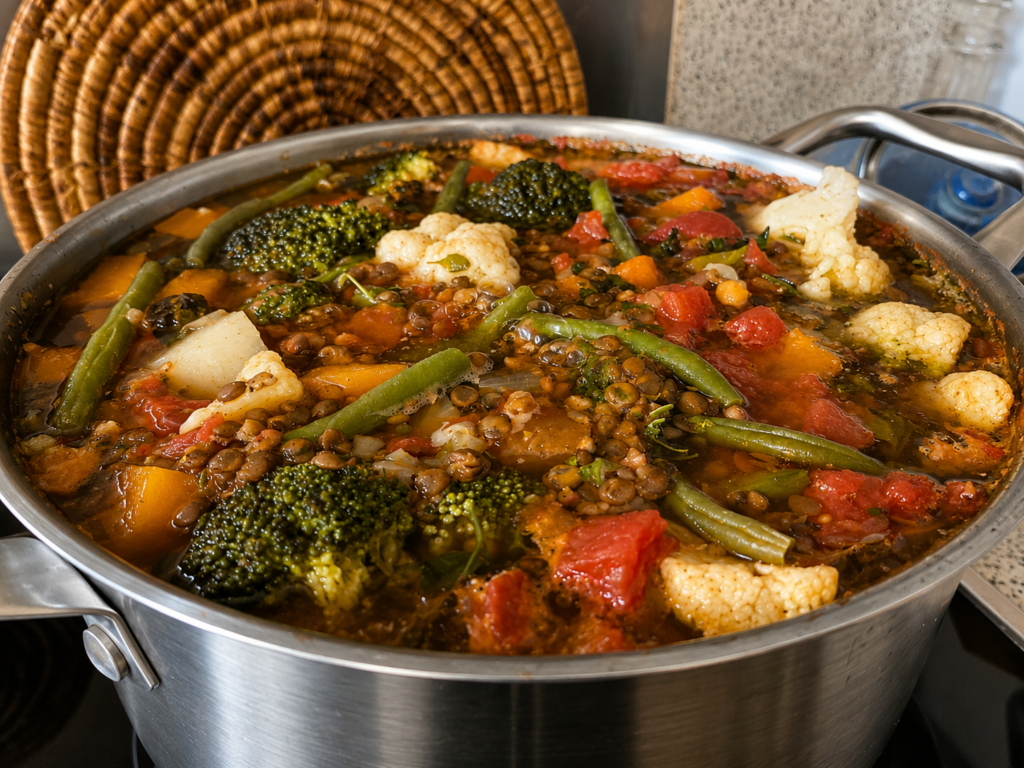
Minestrone is where vegetables that might have been forgotten at the back of the fridge or freezer, find a purpose again, coming together to create something warm, simple, and enough to feed a family.
Every Nonna has her own version, some begin with a soffritto (a base of finely chopped onion, garlic, carrot, and celery gently cooked in olive oil and/or butter), slowly building flavour, others keep it lighter, more like a vegetable broth gently simmered over time. Some add a little pancetta or lard for depth, others keep it entirely plant-based.
For generations, minestrone has been more than just food, but a form of quiet security, the kind of meal that can stretch, adapt, and feed, even when time, money, or ingredients are limited.
It’s Not Just a Soup
If the Rainbow Diet is about eating across colours, then minestrone may be one of its simplest expressions. In a single bowl, it can bring together greens, orange, reds, whites, legumes and grains, each contributing different fibres, vitamins, minerals and phytonutrients. In that sense, minestrone does not just fit the “five colours” philosophy, it almost embodies it. And that diversity matters, because much like sowing different seeds in a garden creates healthier soil, offering a variety of plant foods may help support the diversity of the gut microbiota, our Little Garden Within.
Different vegetables bring different fibres, and different fibres help feed different microbes, and diversity, in both a garden and the gut, tends to support resilience. That is one of the reasons traditional dishes like minestrone fit so naturally within a balanced way of eating. It is a way of thinking about food, teaching balance without calculation, variety without complication, and nourishment without restriction.
It reminds us that a meal does not need to be complex to be complete, and that cooking does not always begin with a recipe.
Minestrone and Motherhood
In traditional Italian culture, simple vegetable-based soups have long been associated with care, especially during delicate phases like pregnancy and the postpartum period. Warm, soft, and easy to digest, minestrone offers hydration, fibre, and a wide range of nutrients without being heavy. It is the kind of food that supports the body quietly. There are no strict rules or medical claims in traditional practice, but there is a shared understanding: when the body is tired, recovering, or adjusting, simple food is often what is needed most. In many households, a light minestrone or vegetable broth would be among one of the first meals offered after birth.
Minestrone also has a natural place in early childhood. For babies and young children, it is often one of the first ways to introduce vegetables in a gentle form.
I remember eating it often as a child, and it was one of the first soups I prepared for my own baby. It is simple, adaptable, and easy to adjust depending on age and needs. But more than anything, it offers a way to introduce variety without complexity.
Mani in pasta, it’s time to cook!
A small note before you begin: there is no single right recipe to make minestrone!
Use what is available, what is affordable, and what is in season. If broccoli is expensive, use silver beet. If frozen vegetables are easier or cheaper, use that.
Add kumara, sweet corn, leeks or whatever you have or prefer, make it your own. That is exactly how minestrone has always worked.
This is the winter version my mother often made, shaped in part by what we had from my grandparents’ vegetable garden, but every kitchen will have its own version.
And that is exactly the point, let the season, the fridge, or the garden guide the pot.
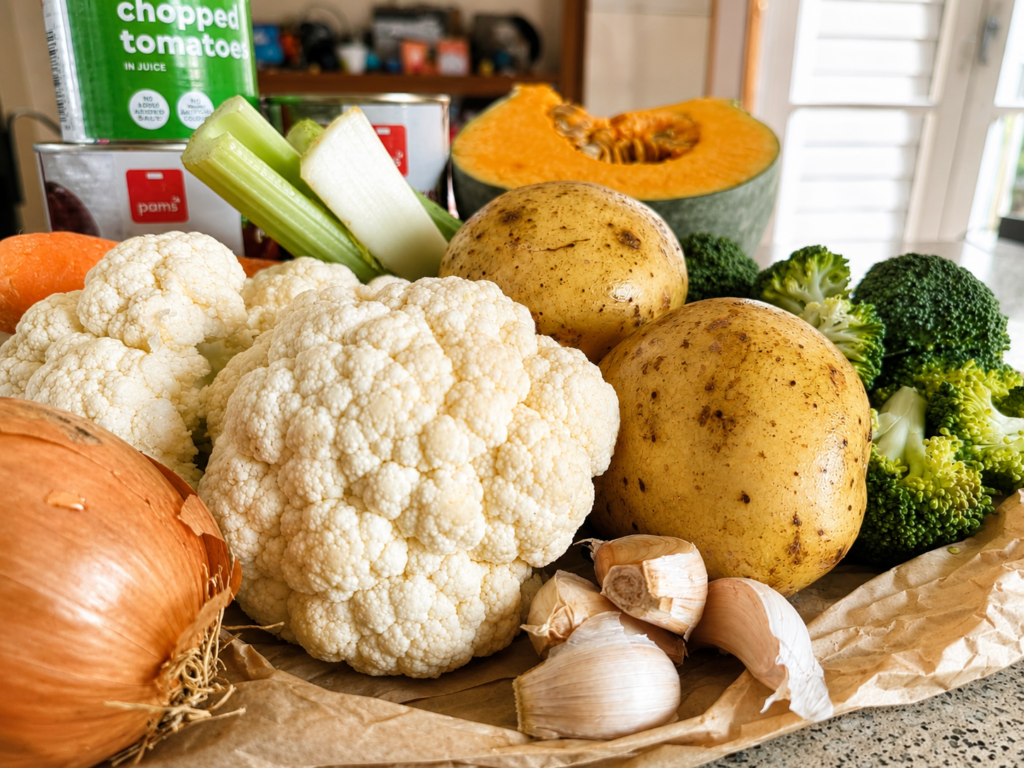
Ingredients for a Winter Version (Serves 6-8)
For the flavour base (soffritto)
- 100 g carrots, finely diced
- 100 g brown onion, finely chopped
- 80 g celery, finely chopped
- 4 garlic cloves, finely chopped
- 8 tablespoons extra virgin olive oil
- Fresh herbs, to taste (I recommend rosemary, thyme, oregano, and/or bay leaves)
Vegetables
- 200 g pumpkin, peeled and cubed
- 200 g potatoes, peeled and diced
- 200g broccoli florets
- 200 g cauliflower florets
- 150 g green beans (frozen is fine)
- 150 g peas (frozen is fine)
- 1 tin chopped tomatoes (plain, no added flavourings), though fresh ripe tomatoes are even better when available; just remove the skin before adding them to the pot.
- 1 tin of sliced beetroot (use the fresh one if you prefer)
- 1 tin chickpeas
- 1 tin beans (choose what you prefer, cannellini, borlotti, black-eyed beans, lentils, or even a mix work well)
Extra
- Salt and black pepper, to taste
- Water, enough to cover and adjust consistency (you can also use bone broth for a deeper flavour and an extra source of nutrients like collagen and protein)
To finish
- Extra virgin olive oil, for serving
- Parmigiano, mandatory!
Prepare your vegetables:
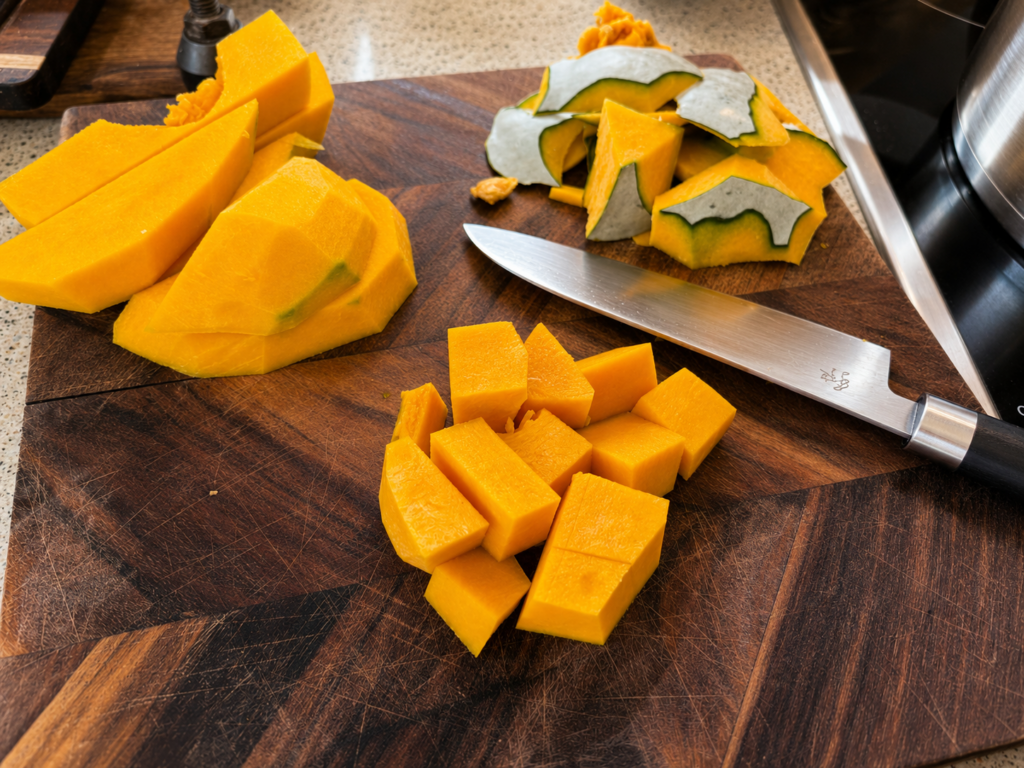
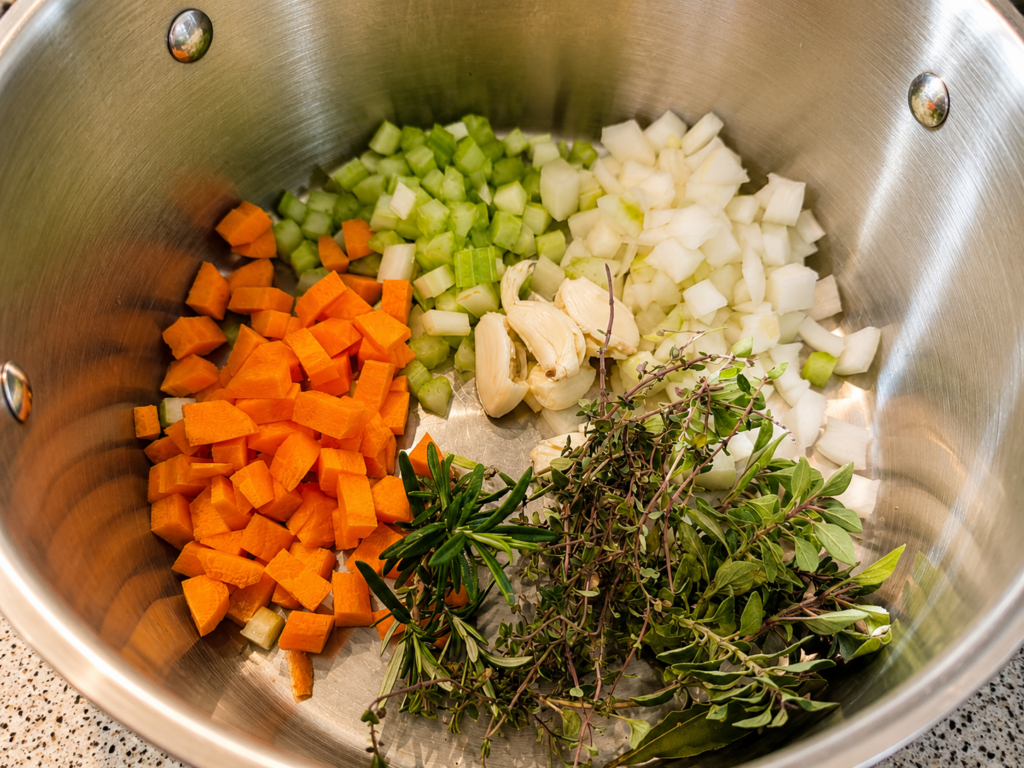
Wash and prepare all your vegetables first. Peel the pumpkin, remove the seeds and fibres, and cut into small cubes. Dice the potatoes, cut the broccoli and cauliflower into small florets, trim the green beans if needed, and have your peas ready.
Drain the chickpeas and your chosen legumes lightly, reserving some of their liquid to help naturally thicken the Minestrone. Open your tomatoes and beetroot if using tinned.
Make the flavour base:
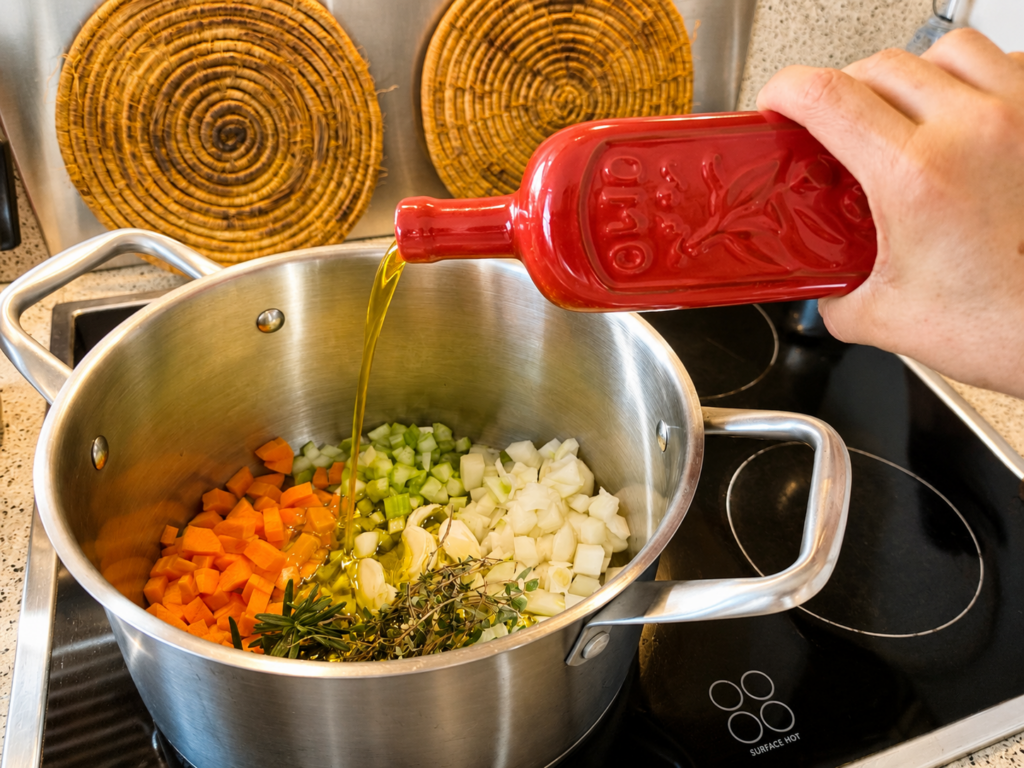
In a large heavy pot, add the onion, garlic, carrots, celery and fresh herbs.
Season with a small pinch of salt, black pepper and, if you like, a little nutmeg, completely optional, but it gives the soup a gentle warmth in the background.
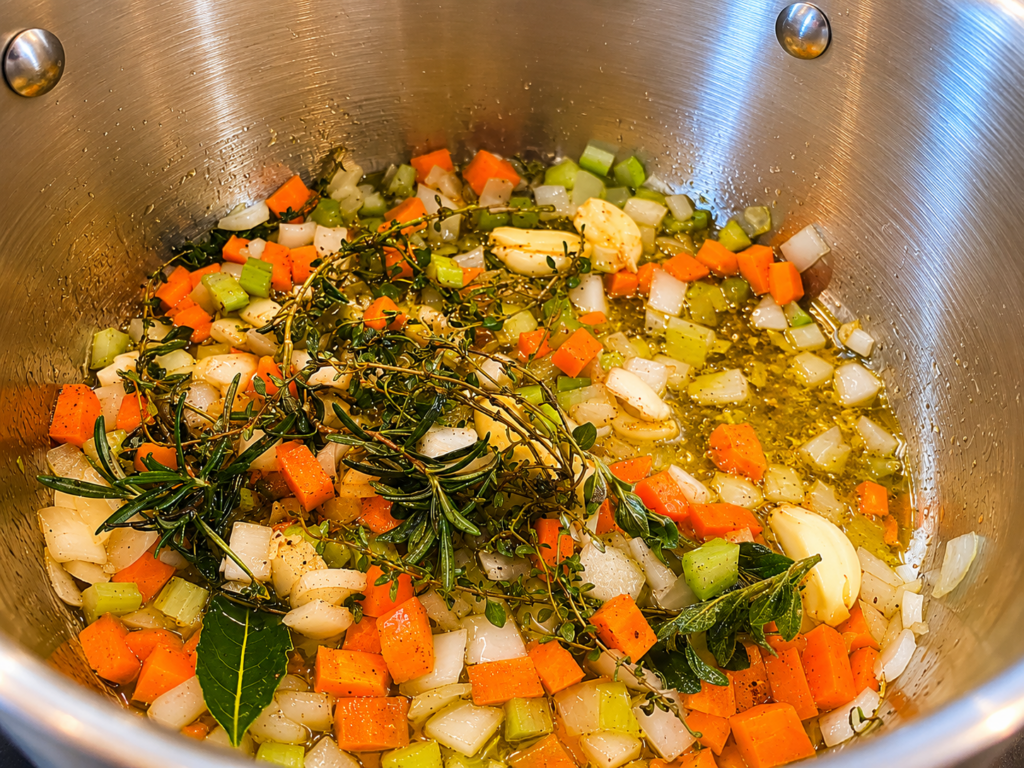
Drizzle in the olive oil, place the pot over medium-high heat and begin cooking the vegetables slowly, stirring often, allowing them to soften and release their flavour together as the pot warms up. Cook for about 8–10 minutes, until fragrant and lightly softened.
Build the soup:
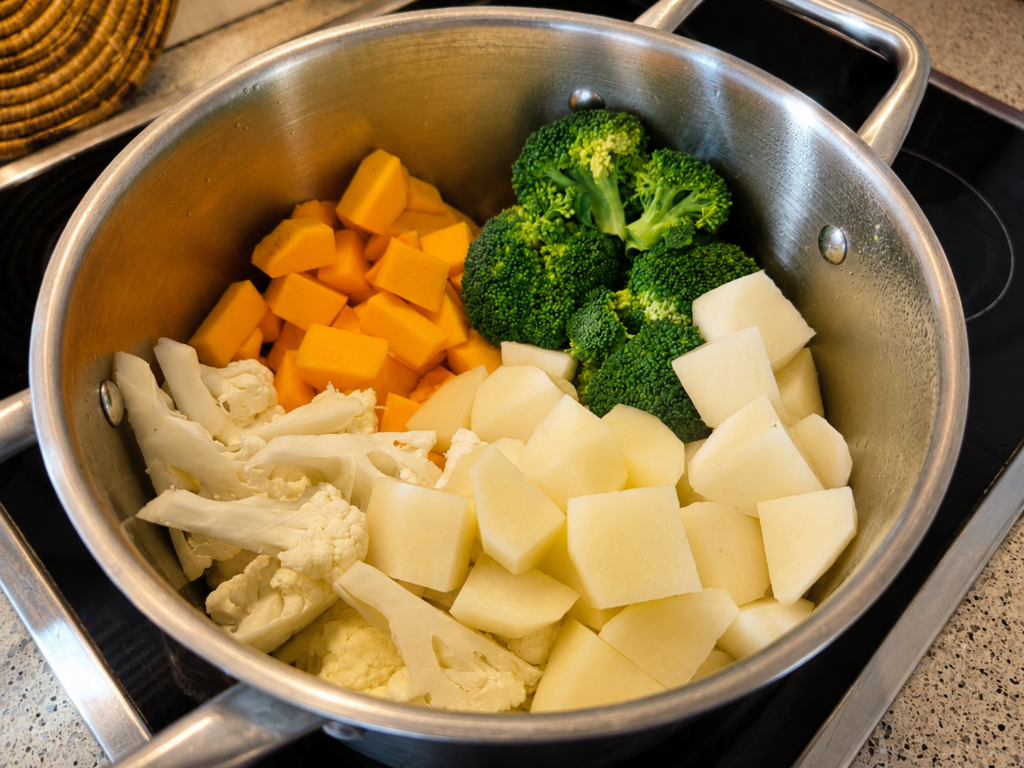
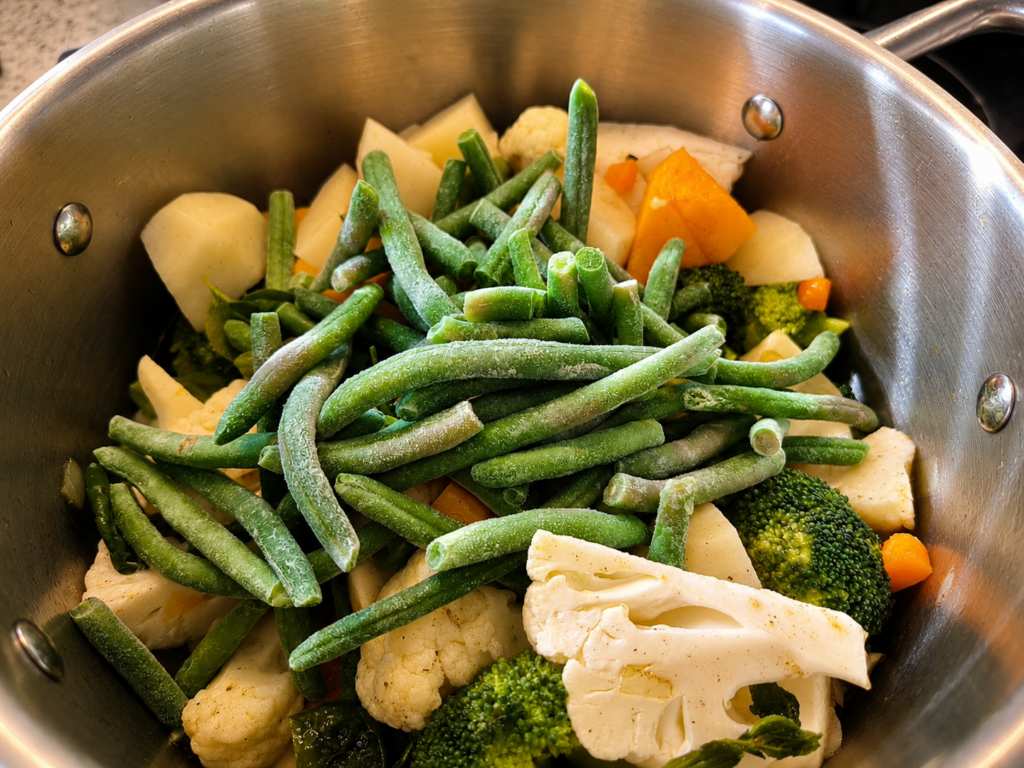
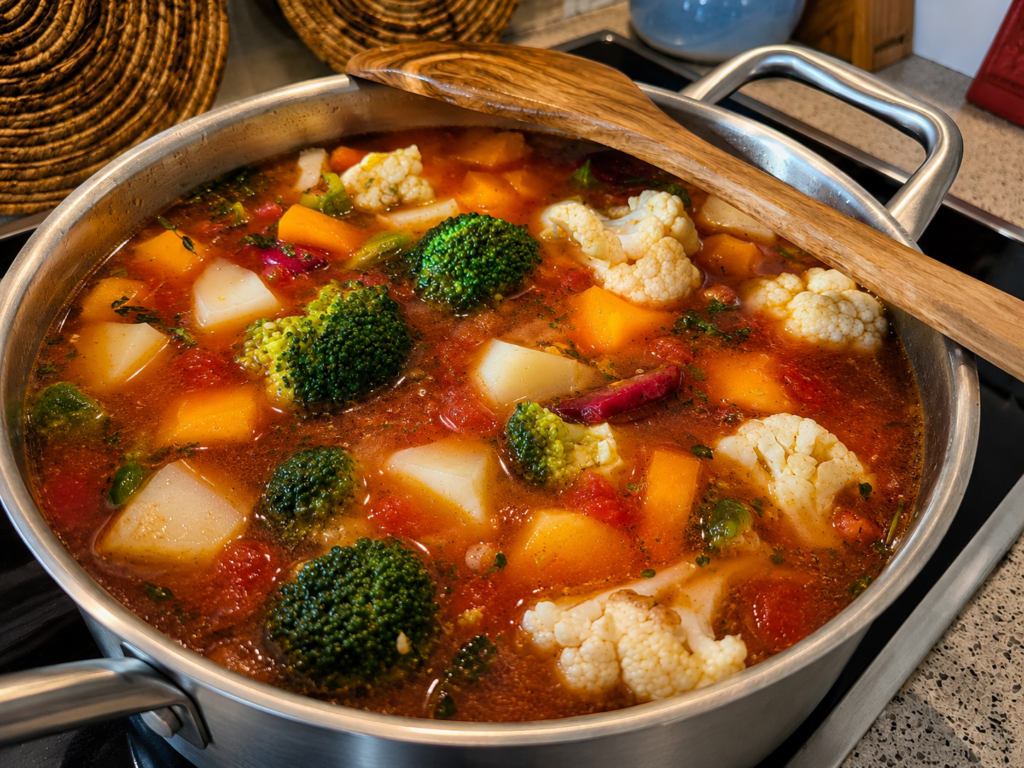
Add the pumpkin, potatoes, cauliflower and broccoli florets. Stir everything well and let the vegetables cook for another 5 minutes, allowing them to lightly colour and absorb the flavour of the soffritto. Add the frozen green beans and stir again.
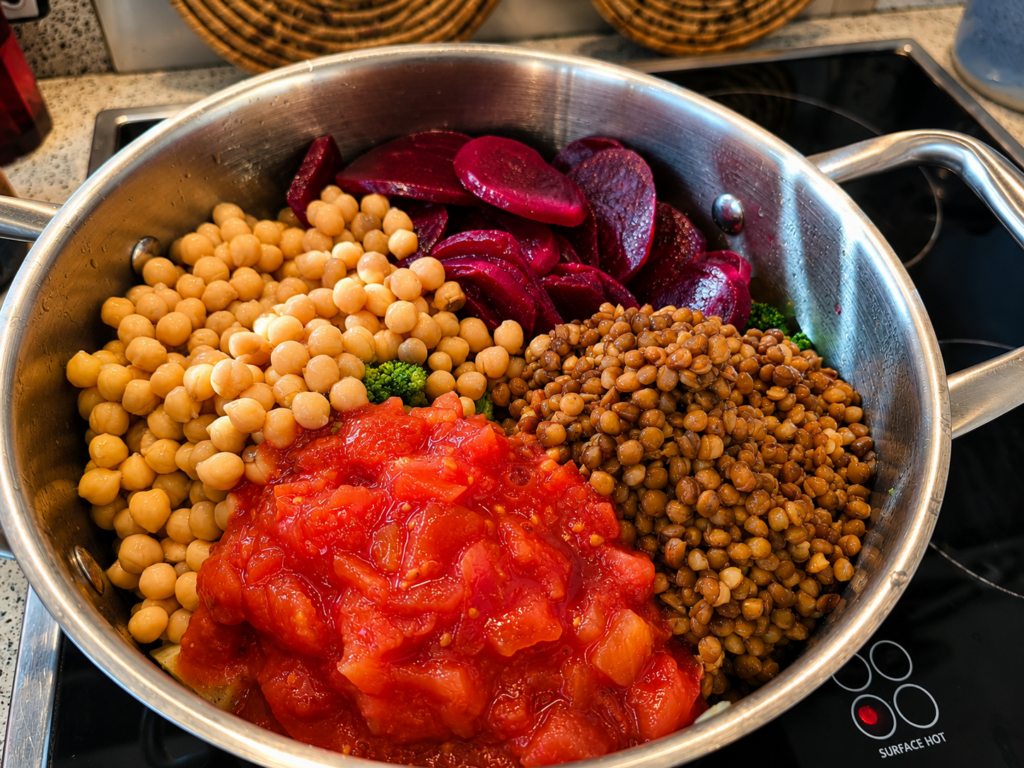
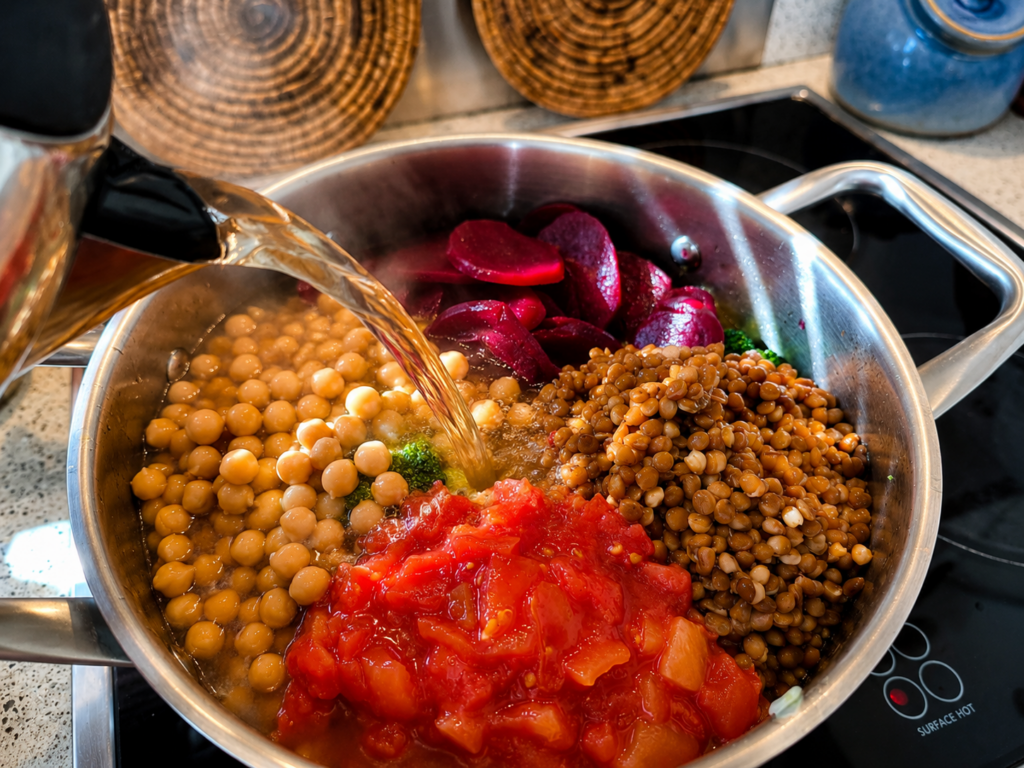
Now add the chickpeas, lentils (this is what I am using), chopped tomatoes and sliced beetroot. Mix everything together well, then cover generously with hot water. Partially cover the pot with the lid, you can place a wooden spoon across the top and rest the lid over it, then bring the soup to a gentle boil.
Once boiling, reduce the heat to low and let it simmer slowly for 40 minutes, allowing all the vegetables to soften and the broth to become rich and full of flavour.
Finish the soup:
About 15/20 minutes before the end of cooking, add the frozen peas.
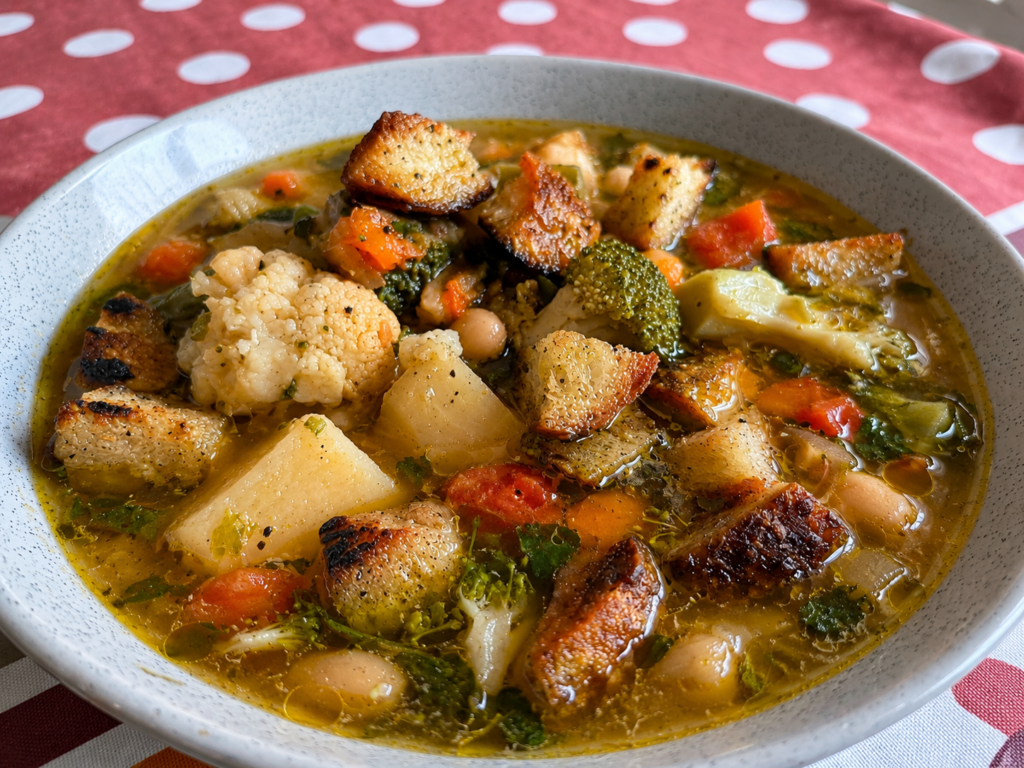
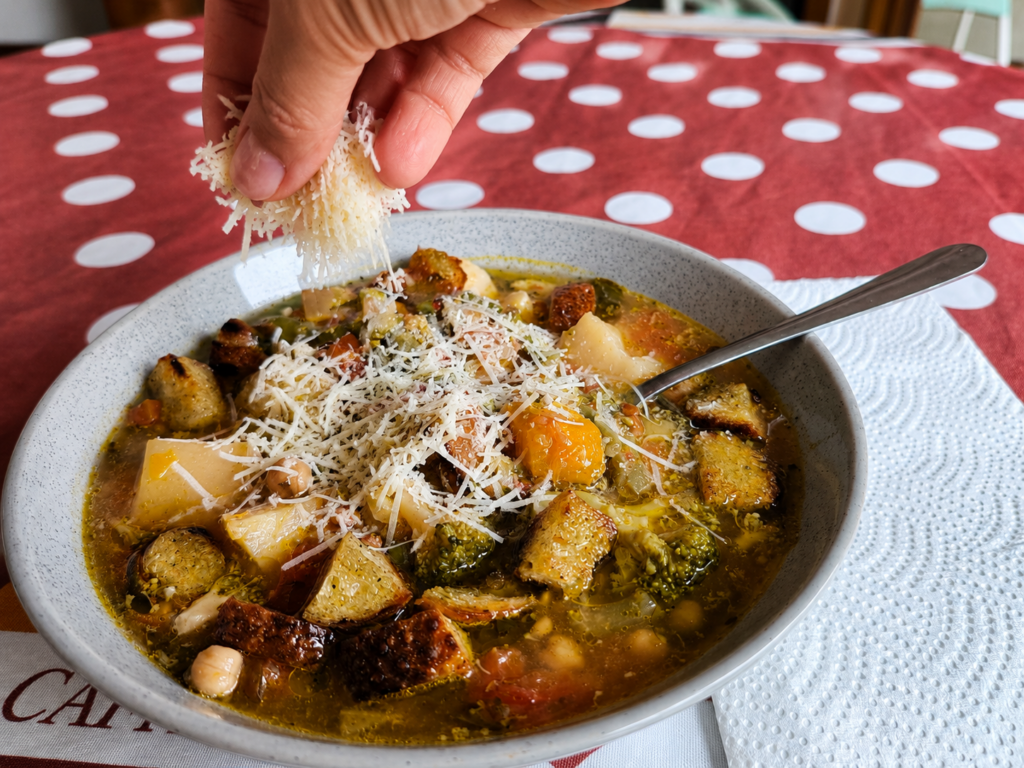
Taste and adjust the seasoning as needed. Remove any herb stems before serving. Serve warm with a drizzle of extra virgin olive oil and, if you like, freshly grated Parmigiano.
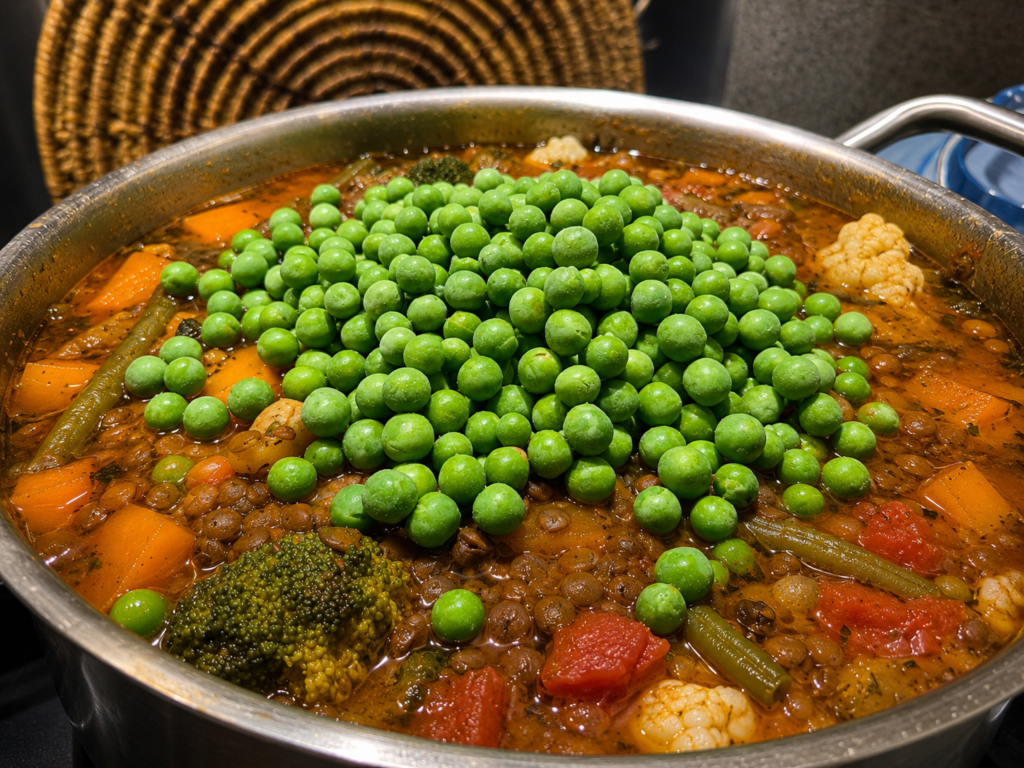
You can also serve your minestrone with homemade croutons made from old bread. Simply toast the bread in a pan or in the oven until golden and crisp.
They are perfect for soaking up the rich broth and add a rustic texture that makes the soup even more comforting.
And yes, if you have a Parmesan rind, let it simmer in the pot near the end.
That is a very Nonna trick that adds incredible richness and depth to the broth.
Small tips
For little ones: For babies or toddlers, you can blend the soup smooth, or partially blend it and leave some texture as they grow. Serve it with some little pasta shapes, rice or even bread.
Freezer friendly: It keeps well in the fridge for 2–3 days and can be frozen for up to 2–3 months.
For the next day:
Like many traditional soups, minestrone is often even better the next day, once the flavours have had time to settle. Leftovers were rarely wasted in traditional kitchens: a handful of rice, pasta, or grains could transform yesterday’s soup into an entirely new meal, a perfect reflection of cucina povera, where one pot could nourish a family more than once.
One of my favourite ways to reuse leftover minestrone is to blend it until smooth, add a little extra water, and cook rice directly into it until it becomes thick and creamy, almost like a rustic vegetable risotto. From there, you can finish it however you like, with grated cheese, crispy pancetta, bacon, or simply a drizzle of olive oil.
And it rarely stops there. My mother, for example, would use the leftover minestrone risotto the next following days to make little frittelline, small golden rice fritters, very similar to tiny arancini.
What began as one simple soup could easily become three or four different meals over several days. That is the beauty of these traditional dishes: they were never designed for just one dinner.
Follow along for more mediterranean-inspired recipes, tradition, and family meals while raising happy eaters, one bite at a time!
Thank you for reading and for being part of the Little Brave Celery family, Ciao!

