Microbiota… have you ever heard this word before?
It sounds complicated, and perhaps a little too scientific for an article about food.
But the truth is, the microbiota has been quietly sitting at the dinner table with us all along. Inside our bodies lives an enormous community of microorganisms constantly interacting with the foods we eat every single day. And surprisingly, many of the traditional meals our grandparents cooked were already helping nourish this invisible internal world long before science could explain it.
Why Should Anyone Care?
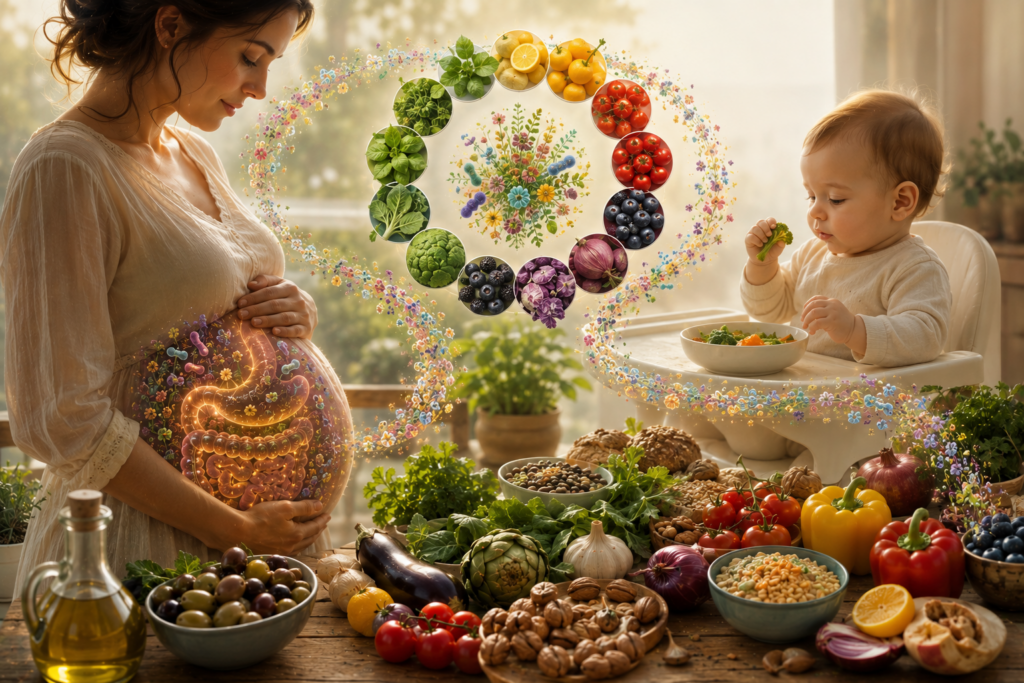
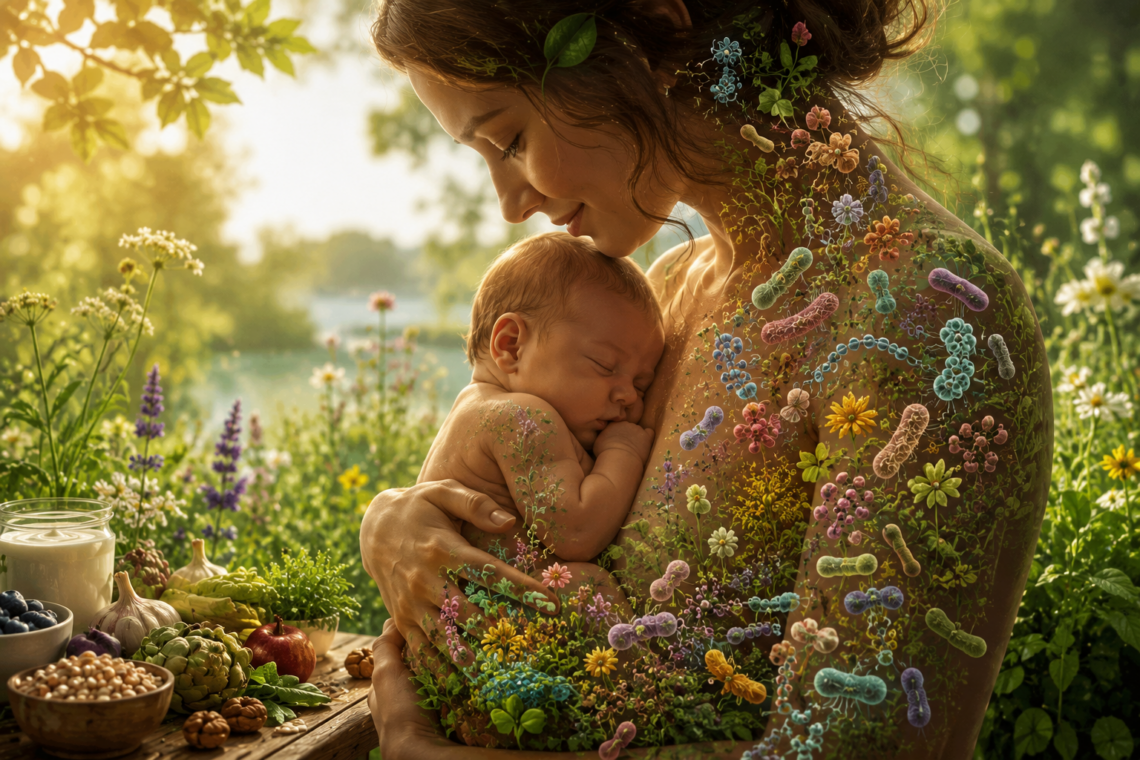
The microbiota is the community of microorganisms that live in and on the body, especially in the gut, and far from being something to fear, these microbes are increasingly understood as part of how we function, interacting with digestion, immune development, metabolism and overall health. Rather than thinking of it simply as “bacteria,” I like to think of the microbiota as an invisible garden, a living ecosystem within us. Like a healthy garden, the microbiota does not depend on a single species thriving alone, but on diversity, many organisms coexisting in balance, each contributing differently to the overall ecosystem.
And just like a garden, what grows there depends partly on what feeds it. Fibres naturally found in legumes, vegetables, fruit, and whole grains can help nourish beneficial microbes, which in turn may contribute to the production of compounds such as short-chain fatty acids, substances currently being studied for their potential roles in gut and immune health. This relationship between nourishment and the microbiota may be particularly significant during pregnancy and the first stages of life, when many biological systems are still rapidly developing. During this periods, nourishment is not only about meeting immediate needs, but may also help support the foundations of a living ecosystem that could influence health long beyond infancy.
Did you know?
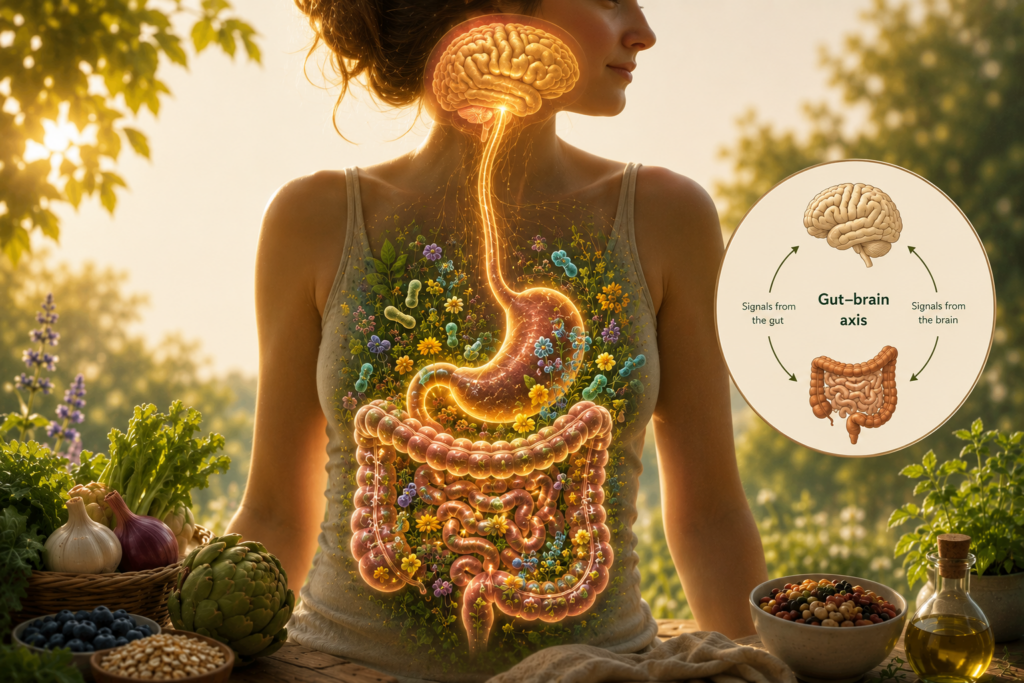
People sometimes call the gut the “second brain.” Not because there is a literal brain in your belly, but because the gut has its own complex nervous system and communicates continuously with the brain. Scientists call this the gut–brain axis, and the microbiota may also be part of this conversation.
How Did We Discover This?
Although humans have known about microorganisms for centuries, for much of modern medicine bacteria were viewed mainly through the lens of infection, something harmful to eliminate, rather than something that might help support health.
The idea that microbes living within us could play beneficial roles emerged much later. One early clue appeared in the early 20th century, when paediatrician Henry Tissier observed that breastfed infants carried large amounts of Bifidobacterium and proposed these bacteria might support health, a remarkably forward-thinking idea for its time.
For decades, however, research remained limited because scientists could study only microbes they were able to grow in laboratories, while many gut microbes could not be cultured at all. It was a little like trying to understand a minestrone by looking only at the beans floating on the surface, you miss the whole pot.
A major turning point came with DNA sequencing and metagenomics, which allowed researchers to study entire microbial communities directly from samples.
Suddenly, the gut was no longer seen as simply containing bacteria, but as a complex ecosystem.
This understanding deepened further with milestones such as the Human Microbiome Project, launched in 2007, which helped shift the scientific question from Do microbes matter? to How do they interact with nutrition, immunity and health? As research advanced, scientists began to understand something even more remarkable: the microbiota is not fixed, it develops. And early life appears to be one of its most dynamic periods.
Maternal Microbiota in Pregnancy
Pregnancy is not only a time when a mother nourishes her growing baby through nutrients, but also a period in which important microbial foundations may be influenced. Maternal diet, lifestyle, metabolic changes and even stress can interact with the mother’s gut and vaginal microbiota, both of which undergo natural shifts during pregnancy.
Research suggests that as gestation progresses, changes occur in microbial composition, including increases in groups such as Bifidobacteria, which are studied for their roles in nutrient metabolism, intestinal barrier support and protection against potential pathogens. Some emerging research has also explored whether microbial exposure may begin before birth, with ongoing investigation into possible maternal–fetal microbial interactions during pregnancy, though this area remains scientifically debated.
What is clearer is that maternal dysbiosis, an imbalance in the microbiota, has been associated in research with metabolic and inflammatory disturbances, including links with gestational diabetes and possible downstream effects on infant health. Together, these findings reinforce an important idea: supporting a mother’s wellbeing through balanced nutrition, movement, stress care and appropriate antibiotic use when needed may help support not only maternal health, but also the earliest foundations of the baby’s invisible garden.
Birth is Only the First Chapter
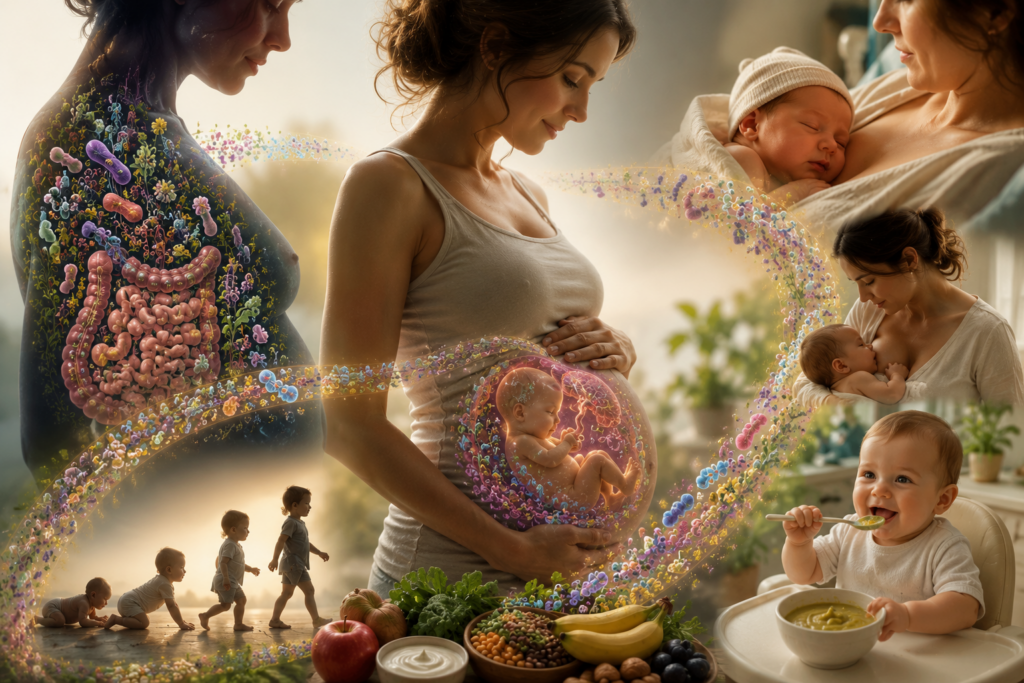
What makes early life so important is that the microbiota is not fully established when a baby is born, it continues to develop. Research suggests the infant microbiota begins taking shape through early exposures: Whether a baby is born naturally or by caesarean, whether they are breastfed, and how complementary foods are introduced may all influence which microbial communities become established.
In the first months of life, microbes adapted to milk feeding, including groups such as Bifidobacteria and Lactobacillus, tend to predominate. Then weaning brings a major shift, as solid foods help encourage greater diversity and the gradual maturation of the gut ecosystem. By around two to three years of age, a child’s microbiota begins to resemble a more adult-like pattern. From pregnancy to first foods, the invisible garden is not built all at once, it is layered, seeded, fed, and shaped.
Feeding the Invisible Garden
If the microbiota is an invisible garden, then food helps tend the soil, and this is where traditional food wisdom and emerging science begin to meet.
Research suggests that dietary patterns can influence the composition and activity of the gut microbiota, with important differences observed between people following a typical Western dietary pattern and those following a more traditional Mediterranean Diet.
In this sense, the microbiota has even been described as a kind of biological reflection of long-term eating habits, almost as if the body remembers patterns at the table. That idea fascinates me, because many of the foods traditionally valued in Italian cooking, like, legumes, vegetables, fruit, whole grains, olive oil, nuts, and fish, are also foods associated with microbial diversity and with the production of metabolites, vitamins, and other bioactive compounds currently being studied for their potential roles in digestion, immune regulation, and the complex communication pathways between the gut and the rest of the body.
Plant-rich dietary patterns have also been associated with fiber-loving microbes, including Prevotella, which helps the body process fibre-rich foods that have been staples of traditional diets for generations. By contrast, dietary patterns built around ultra-processed foods, refined grains, excess saturated fats and large amounts of red meat have been associated with less favourable microbial profiles, including metabolites such as Trimethylamine N-oxide, studied in relation to cardiovascular risk.
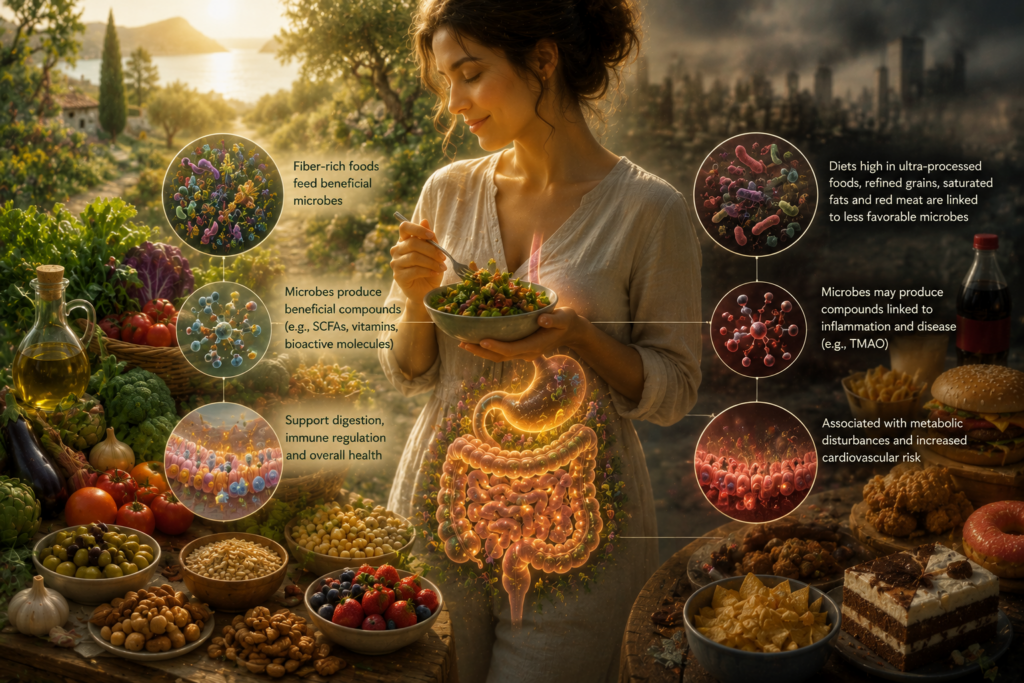
Together, these findings reinforce a powerful idea: food does not only nourish us directly, it may also help shape the microbial ecosystem living alongside us.
Perhaps this becomes even more meaningful during the first 1,000 days, when many biological systems are still rapidly developing. If maternal diet can influence aspects of the mother’s microbiota, it may also help shape part of the microbial environment a baby encounters early in life. In many ways, these early experiences may help lay some of the foundations for future health.
This is why I find such a beautiful parallel between the Mediterranean pattern and the five-colour approach to eating: diversity on the plate may help nourish diversity within the invisible garden itself. In this sense, the Mediterranean pattern becomes more than a list of foods, but an everyday practice of nourishment through variety, fibre, seasonality, and simple meals repeated over time.
In upcoming articles, we will explore simple ways to nourish our little invisible garden together… one bite at a time!
For now, feel free to explore my latest recipes here, and follow along for weekly tips and practical ideas for supporting your garden of microbes.
Thank you for reading and for being part of the Little Brave Celery family, Ciao!