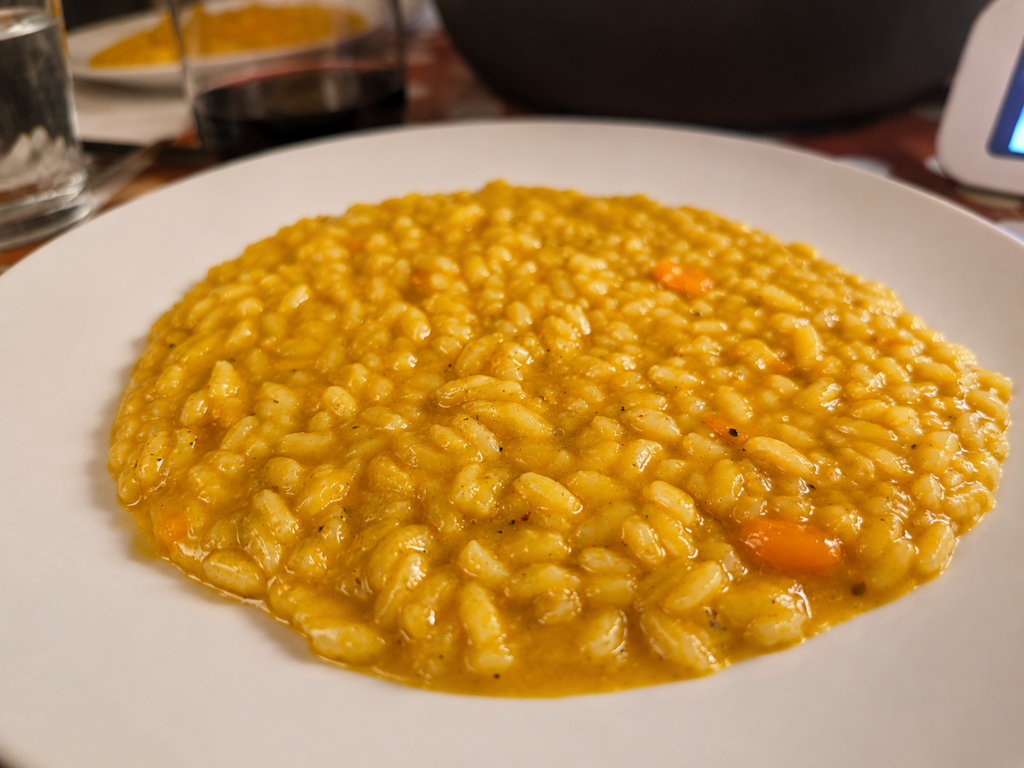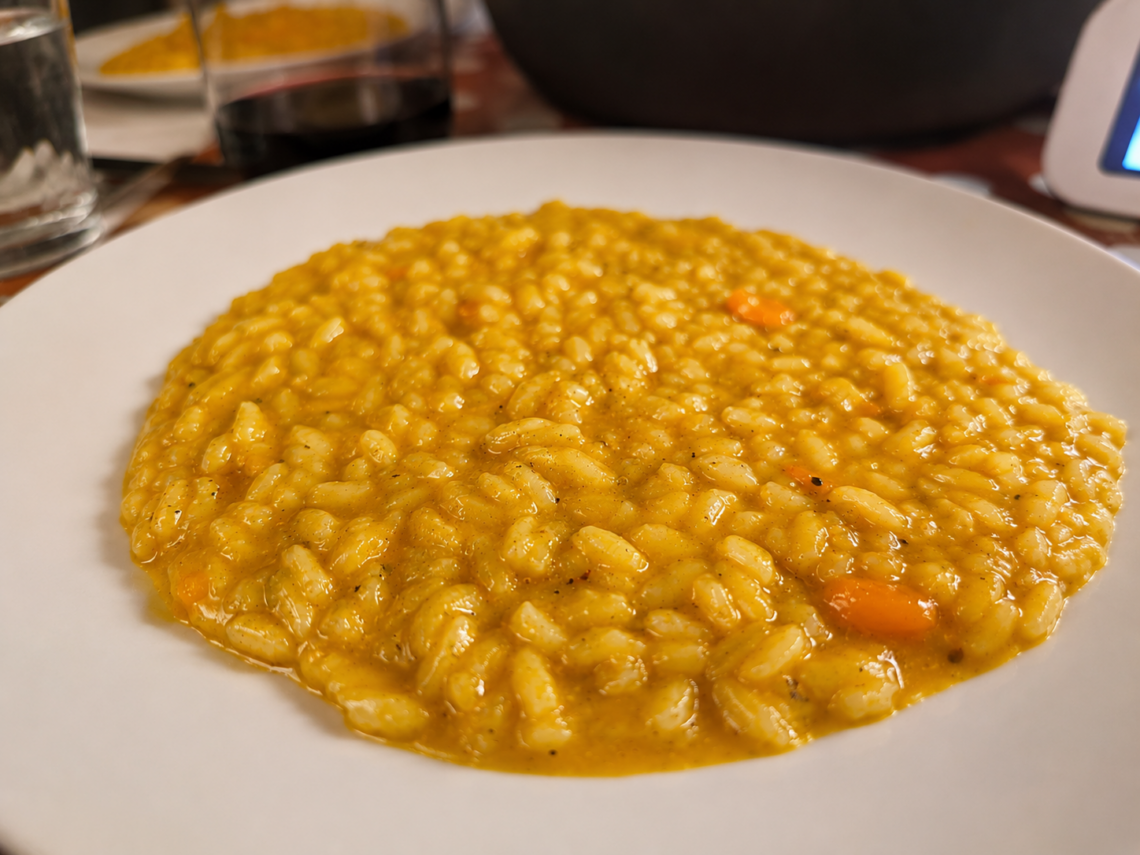
Risotto alla Zucca
In my family, autumn always tasted like pumpkin.
My grandparents had a large vegetable garden, and every year, when the season arrived, it seemed to overflow with pumpkins. There were always more than we knew what to do with, so we cooked them in every possible way, roasted for gnocchi, baked in bread, turned into soups, folded into cakes… and very often, stirred slowly into risotto. I can still picture it, risotto quietly bubbling on the stove while the windows fogged up from the cold outside and the kitchen filled with that warm, unmistakable smell of pumpkin and broth. A recipe repeated so many times that nobody really needed to measure anything anymore. And now, years later, I find myself making it again, this time for my own child, who loves pumpkin just as much.
What makes risotto so special is not complexity, but simplicity built slowly and with attention. At its core, risotto is made from only a handful of ingredients: rice, broth, a little butter, Parmesan, sometimes wine, sometimes onion. Nothing extravagant, and yet, when treated with care, these simple ingredients transform into something deeply comforting and surprisingly sophisticated. Perhaps this is why risotto has remained such an important part of Northern Italian cooking for generations.
It teaches patience in a way many modern meals no longer do. It asks you to stay near the stove, to stir, to taste, to pay attention. Risotto cannot really be abandoned or rushed, and maybe this is part of its nourishment too.
Una Pentola per Tutti!
(one pot for all)
Pumpkin risotto did not begin as a luxury dish or a restaurant creation. Like many traditional Italian recipes, risotto alla zucca has humble origins rooted in cucina povera, the “poor kitchen”. These were dishes designed to feed entire families: children, grandparents, workers, mothers, everyone eating from the same pot.
In Northern Italy, particularly in regions like Lombardy, Veneto, and Piedmont, rice fields slowly became part of the landscape centuries ago. The wetlands and flooded plains created ideal conditions for rice cultivation, and over time rice became a staple ingredient because it was filling, affordable, versatile, and capable of feeding many people with relatively little. The history of rice itself stretches back thousands of years to Asia, where it was first cultivated long before arriving in Europe through trade and agricultural exchange. Once established in Northern Italy, rice slowly became deeply connected to regional identity and peasant cooking traditions. However, not all rice behaves the same way, traditional risotto varieties such as Arborio, Carnaroli, Vialone Nano contain high amounts of starch, particularly amylopectin, which allows the rice to slowly release creaminess during cooking while still maintaining structure in the centre of the grain. This is what gives risotto its characteristic texture, soft, creamy, but never mushy.
Pumpkin, instead, arrived in Europe much later, following the Columbian exchange after the discovery of the Americas. Yet it quickly became part of peasant cooking across many regions of Italy because it was easy to grow, inexpensive, nourishing, naturally sweet, and capable of lasting through the colder months. And honestly, this is often how the best traditional recipes are born, not from luxury or trends, but from observation, intuition, and people learning how to nourish entire families using what the land was giving them. Underneath the science, the technique, and the history, risotto still carries the same original purpose: to nourish people simply, warmly, and together all in one bowl.
Gentle Nourishment on the Plate
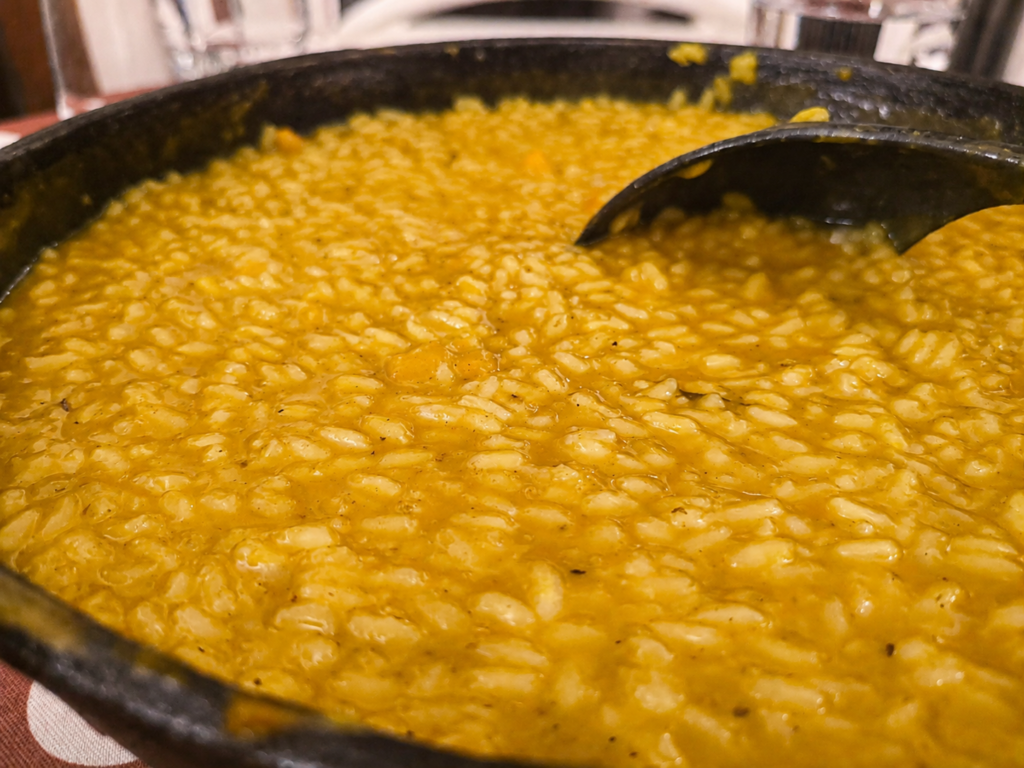
Pumpkin beautifully represents the orange part of the Rainbow Diet. Orange vegetables are particularly rich in compounds called carotenoids, especially beta-carotene, which the body converts into vitamin A, an important nutrient for immune function, vision, cellular health, growth and development during childhood.
But pumpkin offers more than nutrients alone, its natural fibres can also help nourish beneficial gut bacteria, contributing to the complex ecosystem we now call the gut microbiome. And while nobody in my grandparents’ kitchen spoke about “microbial diversity” or “gut health,” they absolutely understood the idea of food being comforting, restorative, and easy to tolerate during childhood, illness, pregnancy, or recovery. Traditional food cultures were often built on observation long before science could explain the mechanisms behind them. And perhaps this is one of the beautiful things about traditional cooking: sometimes flavour, nourishment, and practicality exist together naturally, without needing to be engineered.
From Pregnancy to First Bites
Risotto is one of those rare dishes that can genuinely grow alongside the family.
For babies starting solids, pumpkin risotto can be soft, smooth, and easy to adapt depending on texture and consistency. This is one reason risotto works so beautifully during the early stages of complementary feeding: the ingredients are simple, the texture is gentle, and flavours can be introduced gradually without overwhelming the palate. For younger babies and toddlers, I often prefer finishing the risotto with extra virgin olive oil rather than butter, as olive oil tends to feel lighter and gentler for little stomachs while still contributing healthy fats and flavour.
As children grow, risotto naturally adapts with them, and at the same time, a small spoon of butter within a balanced meal is absolutely not something to fear.
In traditional Italian cooking, butter was never seen as the enemy, but rather as one ingredient among many, used intentionally, in moderation, and within an overall balanced way of eating.
During pregnancy and the postpartum period, this adaptability becomes even more valuable. Food often needs to be nourishing, practical, relatively quick to prepare, and easy to digest during periods where appetite, energy, nausea, or exhaustion may fluctuate significantly. Risotto fits naturally into this reality, it comes together in around 20–30 minutes, can be built from affordable ingredients already available at home, and offers a combination of carbohydrates, fibre, healthy fats, warmth, and satiety that feels both emotionally and physically grounding. Not every nourishing meal needs to be perfect, sometimes it simply needs to be warm, manageable, and soothing enough to help carry people through demanding stages of life.
The Quiet Comfort of Traditional Food
We often see endless reinterpretations, replacements, shortcuts, and wellness versions of foods that nourished families for generations. While adaptation can absolutely have its place, perhaps dishes like pumpkin risotto remind us that nourishing food does not always need to be reinvented from the beginning.
Because many traditional meals already carried the very things modern nutrition now encourages: seasonality, plant diversity, fibre, balance, slow cooking, and shared meals around the table. Not because someone carefully designed them according to nutritional trends or social media wellness culture, but because they evolved naturally around agriculture, practicality, affordability, and the everyday reality of feeding entire families well. Traditional foods changed slightly from house to house, from season to season, from Nonna to Nonna, but their heart remained the same: simple ingredients transformed with care and attention.
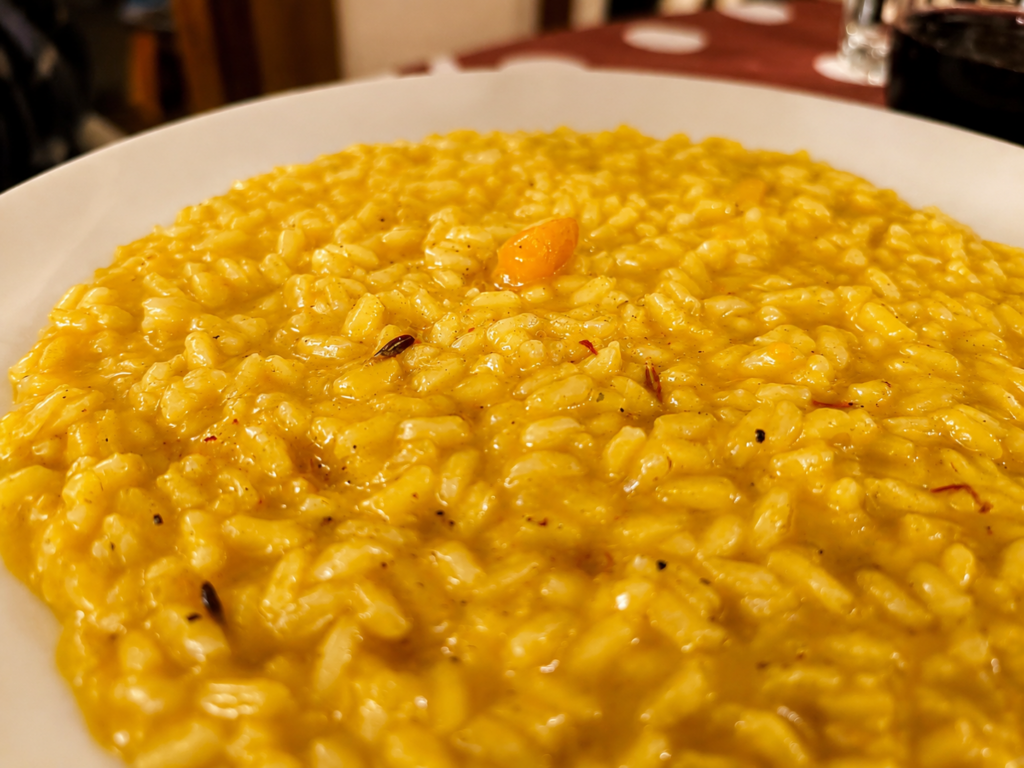
And perhaps this is why dishes like pumpkin risotto still feel so loving today, underneath the recipe itself, there is something much bigger quietly sitting in the bowl: memory, rhythm, warmth, family, and the feeling of being nourished in the deepest sense of the word.
Mani in Pasta, it’s Time to Cook!
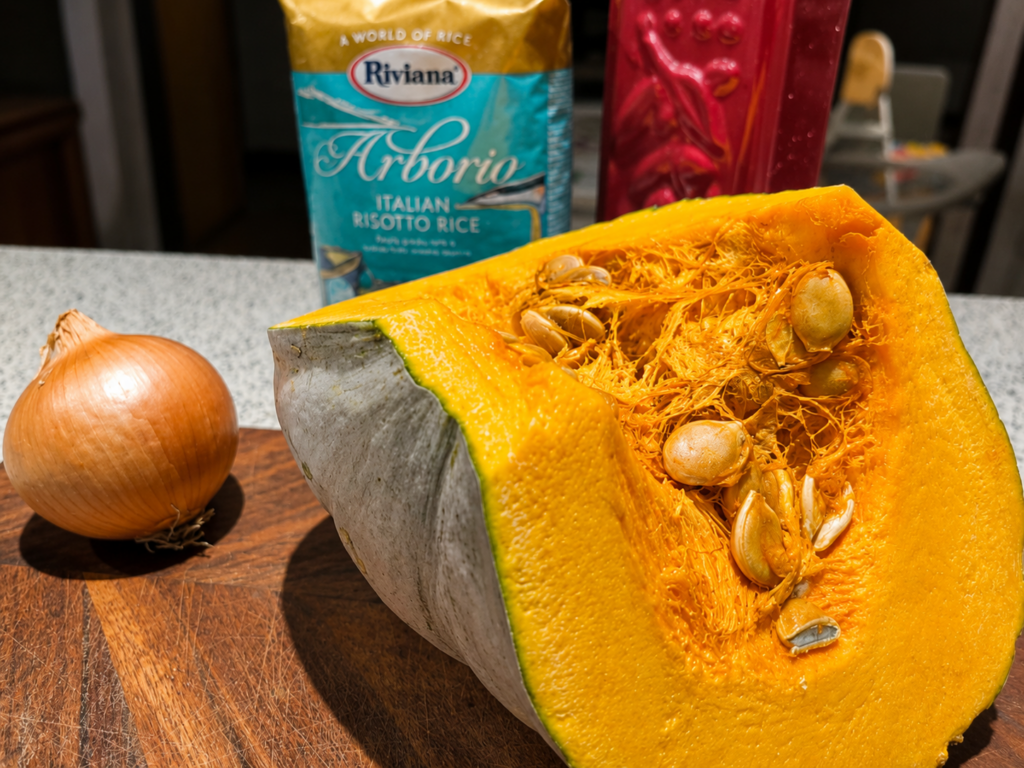
Ingredients (serves 4–5)
- 320 g Arborio rice
- 750 g Delica pumpkin (or another sweet pumpkin variety)
- 100 g Brown onion
- 1.5 L Broth, kept warm (I normally use my own homemade bone broth, but you can use whatever broth works best for you.)
- 100 g Parmigiano Reggiano
- 60 ml white wine (optional, traditionally used in risotto for depth of flavour, but easily skipped for little ones or according to family preference)
- 80 g butter or Extra virgin olive oil
- Salt and black pepper, to taste
- Fresh Herbs, optional ( I personally used rosemary)
1. Prepare the pumpkin: Remove the skin and seeds from the pumpkin, then cut it into slices and finally into small cubes. You should end up with roughly 600 g of usable pumpkin flesh.
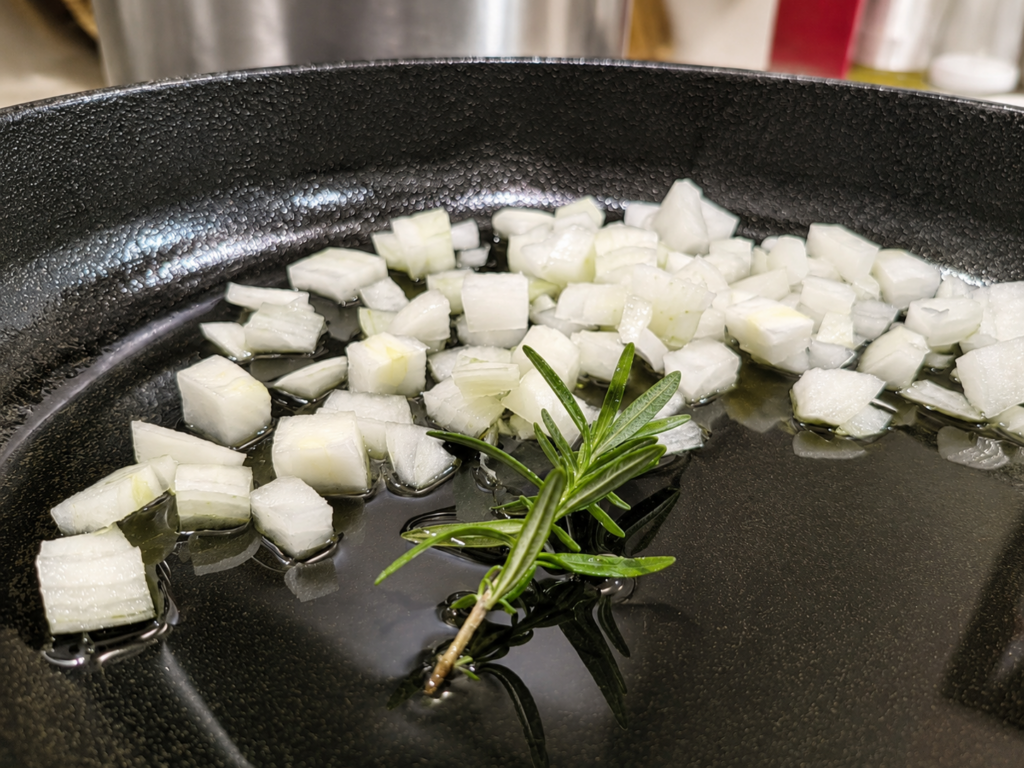
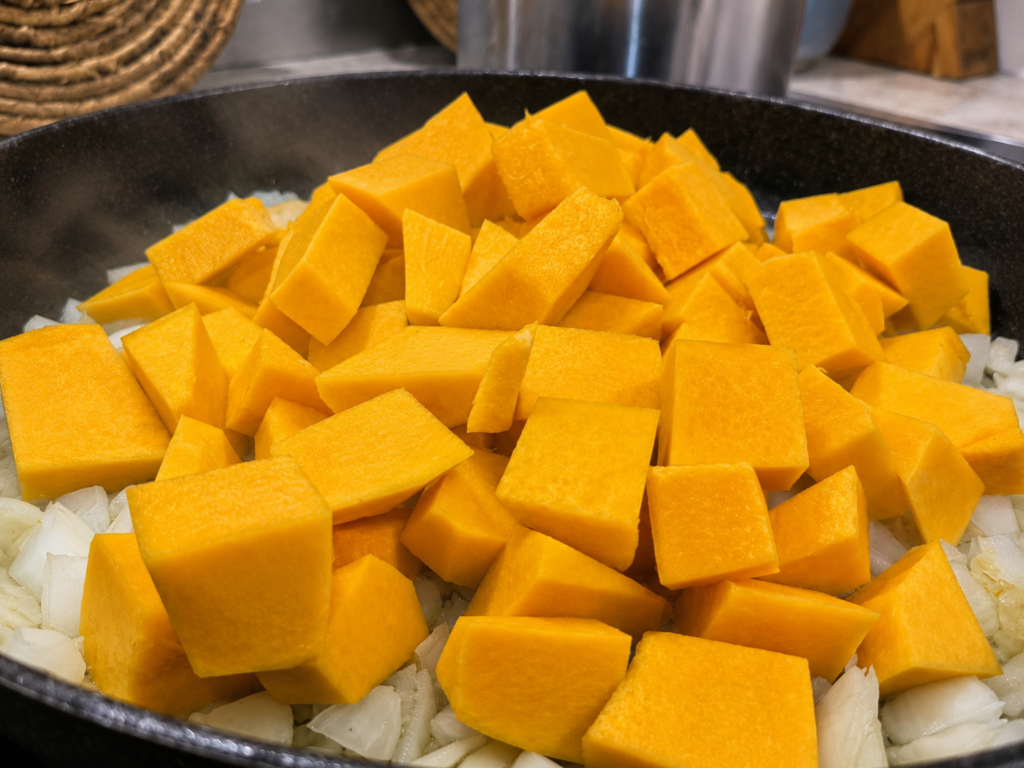
2. Build the flavour base: Finely chop the onion and place it into a large pan with a drizzle of extra virgin olive oil over very low heat. Cook slowly for around 10 minutes until the onion becomes soft, sweet, and almost melts into the oil. Add a small pinch of salt to help draw out the moisture and prevent colouring. This step may seem simple, but it creates the foundation of the whole risotto.
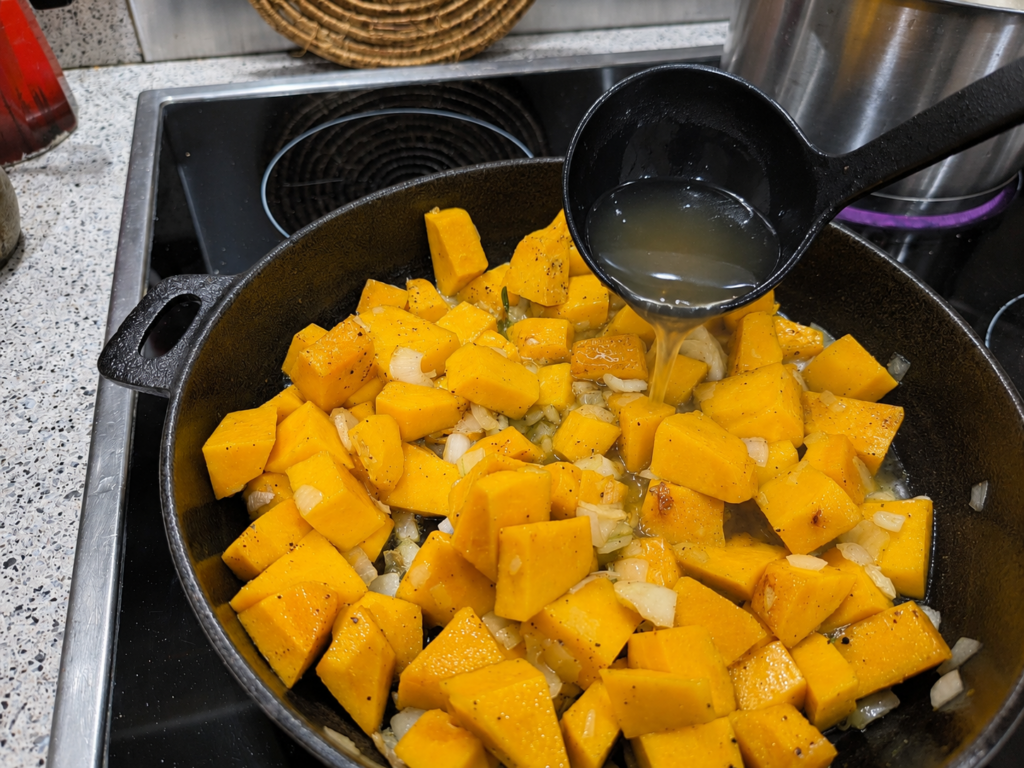
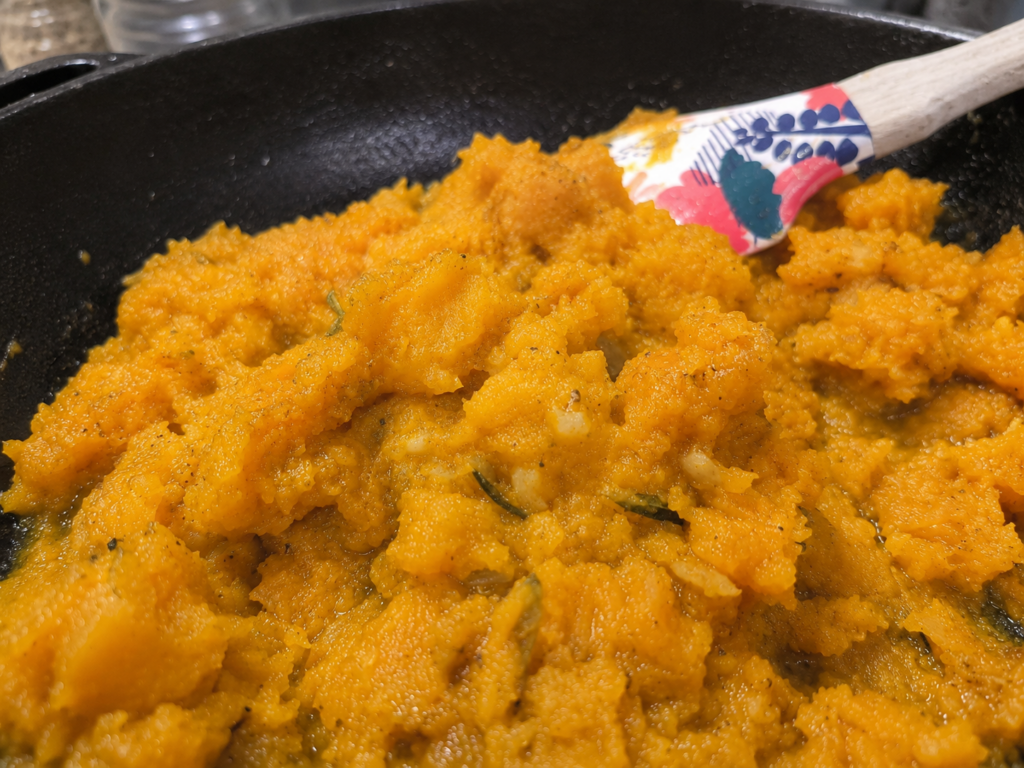
3. Cook the pumpkin: Add the pumpkin cubes to the pan and sauté gently for a few minutes, stirring so they do not stick. Begin adding warm broth one ladle at a time, allowing the pumpkin to slowly soften and break down. Continue cooking for around 20 minutes until the pumpkin becomes tender and naturally creamy. At this stage, your kitchen should already smell like autumn.
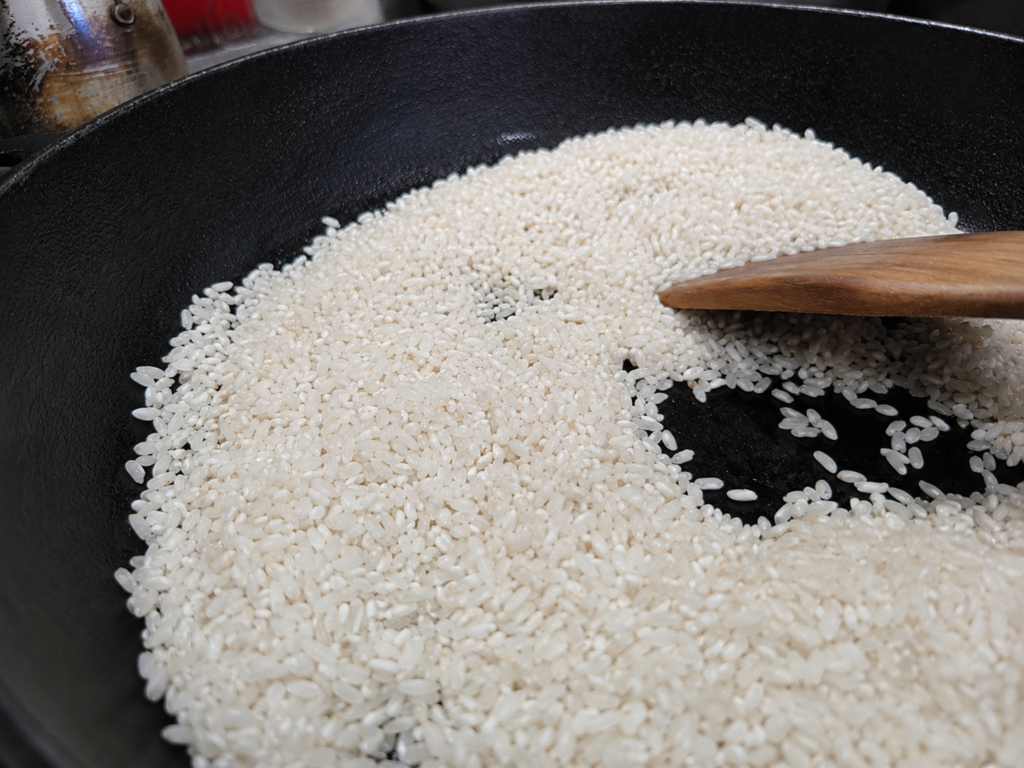
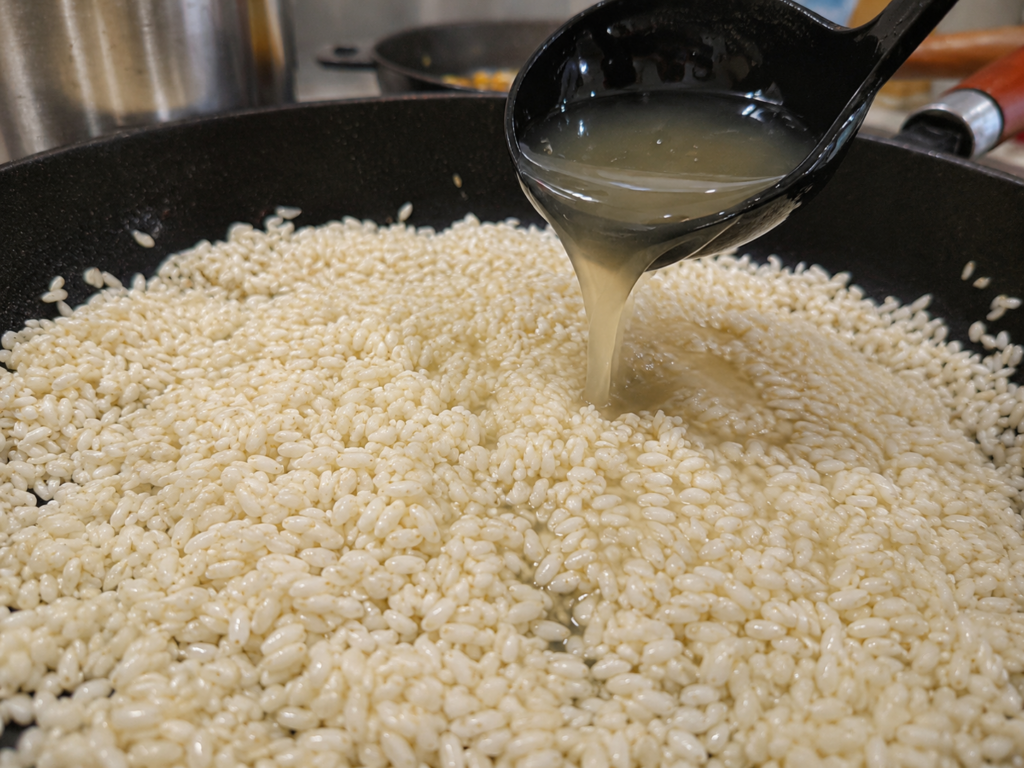
4. Toast the rice: Once the pumpkin is soft and creamy, carefully transfer it into a bowl or container and set it aside for a moment. Give the pan a quick wash and dry it very well. This step matters more than people think, because the pan needs to be completely dry before toasting the rice properly. Add the rice directly into the dry pan over medium-high heat, without oil or butter. This process, called tostatura, helps strengthen the outer layer of the grain so the rice can slowly absorb liquid while still holding its shape during cooking. Stir continuously for 2–3 minutes until the rice feels hot to the touch and slightly translucent around the edges. Then add the white wine, stirring immediately so nothing sticks to the bottom of the pan. The wine helps stop the tostatura process while adding depth of flavour to the risotto. If you prefer not to use wine, especially when cooking for younger babies or according to personal preference, you can simply use a small ladle of warm broth or even water instead. Once the liquid has evaporated or been absorbed, return the pumpkin mixture to the pan and continue building the risotto slowly, adding warm broth little by little as before.
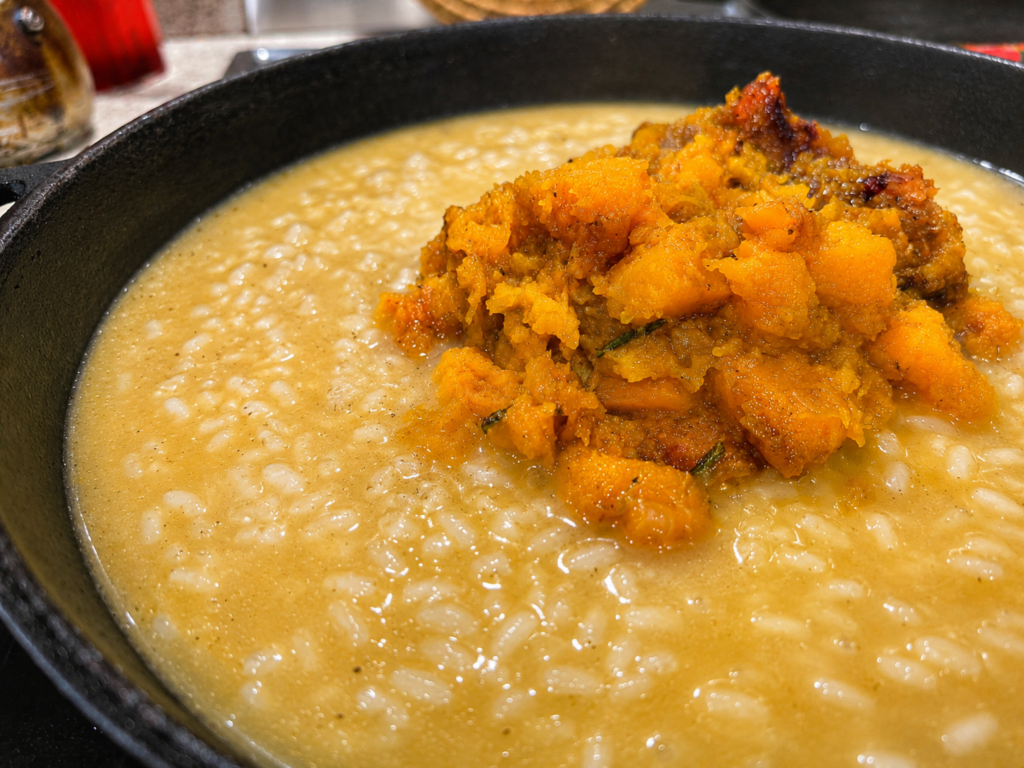
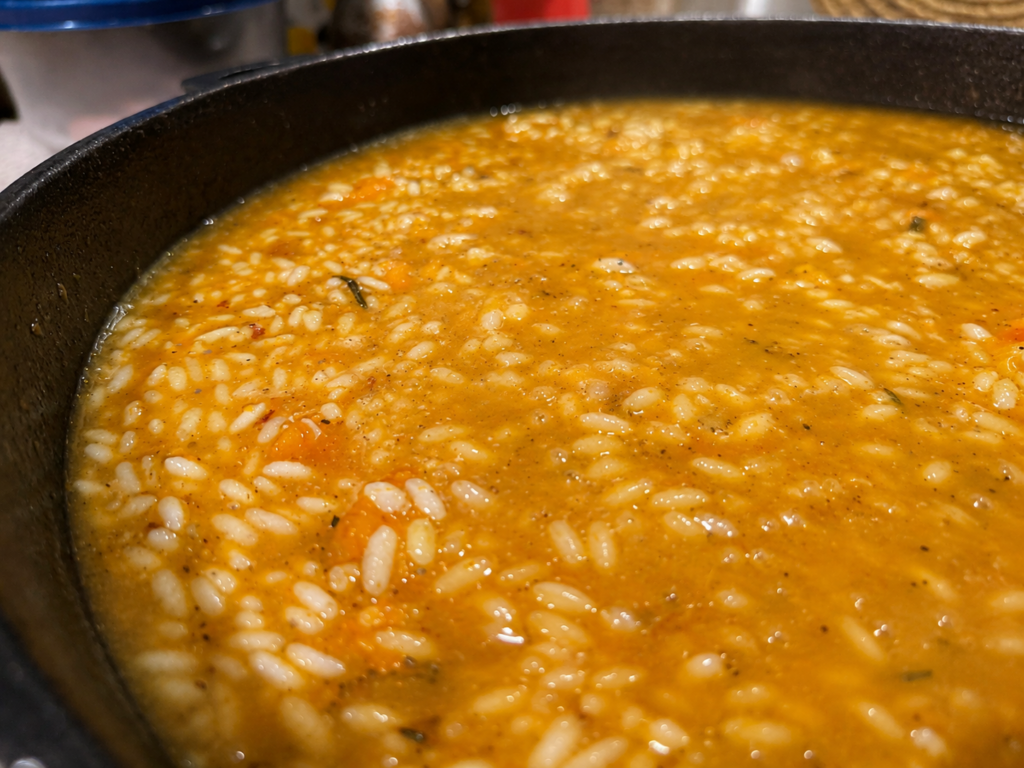
5. Cook the risotto slowly: Mix everything together well and continue cooking by adding warm broth gradually, one ladle at a time. Allow the rice to absorb most of the liquid before adding more. Stir regularly, but gently. The process should feel slow and gradual, almost meditative. Depending on the rice variety used, cooking usually takes around 15–20 minutes. This is where risotto becomes risotto and not boiled rice.
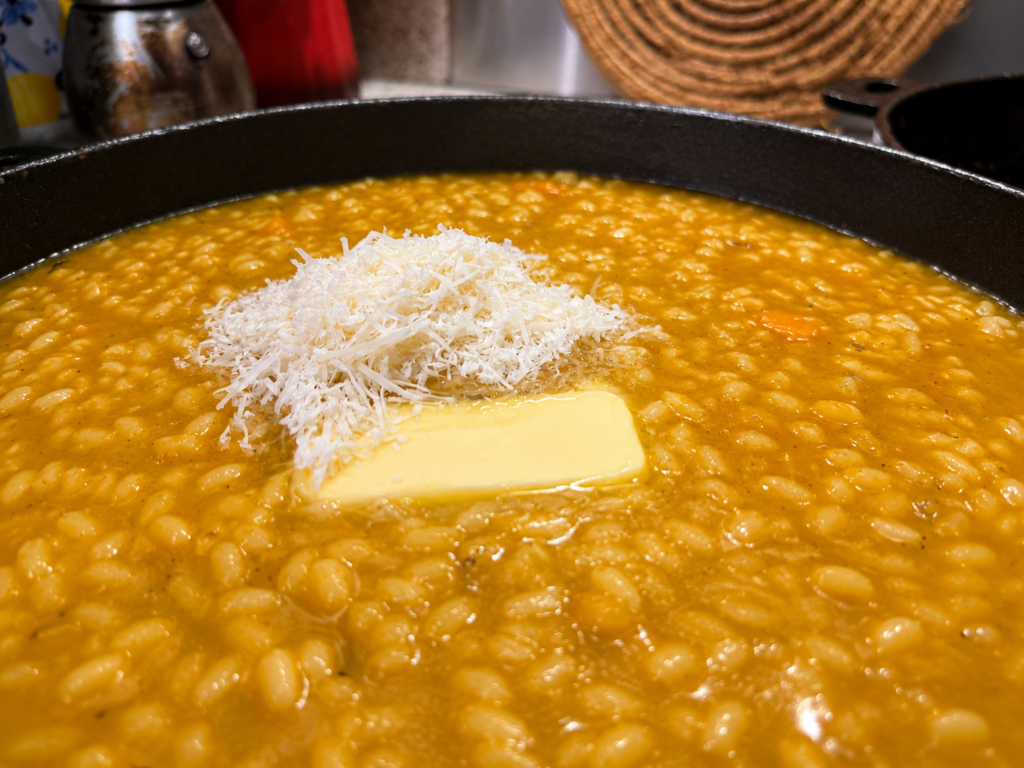
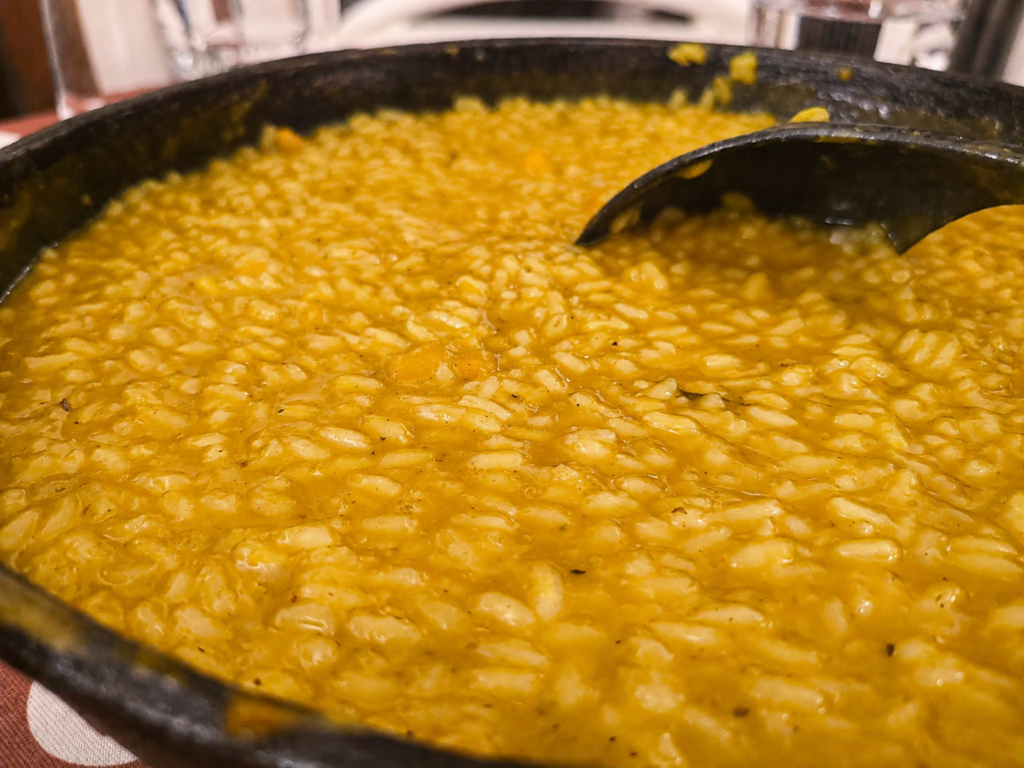
6. Finish the risotto: Once the rice reaches the right consistency, creamy but still holding structure, turn off the heat, add butter and grated Parmigiano Reggiano, then stir energetically to create the final creamy texture Italians call mantecatura.
If you prefer a looser, more flowing risotto (all’onda), add one final small ladle of warm broth before serving. Let the risotto rest for 2-3 minutes, then plate immediately.
Little Brave Celery adjustments: For younger babies and toddlers, you can: remove the salt, skip the wine, finish with extra virgin olive oil instead of butter if preferred, blend the pumpkin smoothly for an even softer texture before adding it to the rice. You can also enrich the risotto with others vegetables or legumes, depending on age and preference.
Storage: Store leftover risotto in an airtight container in the fridge for up to 1–2 days. The next day, leftover risotto can also be transformed into little risotto patties or arancini-style bites for toddlers and family lunches.
Extra nonna tips: The natural sweetness of pumpkin also pairs beautifully with garlic or shallots instead of onion for a slightly deeper flavour. And for an extra creamy finish, some families replace part of the Parmigiano with soft cheese, like ricotta, mascarpone, cream cheese or taleggio.
Because like many traditional Italian recipes, every family eventually creates its own version. And perhaps this is what nourishing food has always been about, simple ingredients, shared together, one bite at a time!
Follow along for more Mediterranean-inspired recipes, traditions, and family nourishment.
Thank you for reading and for being part of the Little Brave Celery family, Ciao!