Iron
Iron is not the most exciting nutrient, it does not have the bright colours of fruits and vegetables, and it does not appear in trendy recipes or wellness headlines.
Most people rarely think about it at all until somebody mentions low iron levels, fatigue, or the need for supplements. And yet, throughout pregnancy, infancy, childhood, and beyond, iron may be one of the most important nutrients in the human body.
Quietly, behind the scenes, iron helps carry oxygen to every cell, supports growth, contributes to immune function, and plays a fundamental role in brain development. Long before a child takes their first steps, says their first words, or learns their first lesson, iron is already helping build the foundations that make those milestones possible.
In many ways, iron is one of the invisible architects of the first 1000 days.
What Iron Actually Does
Most people know that iron helps carry oxygen around the body, and while this is true, it is only a small part of the story.
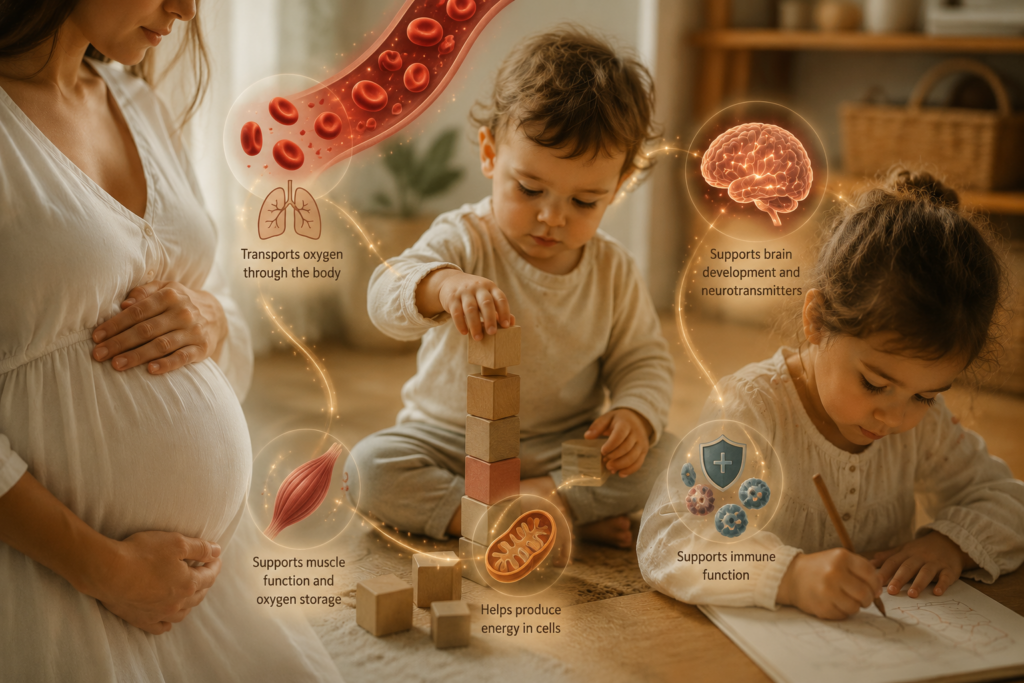
Iron is involved in hundreds of processes that help the body grow, develop, and function properly. One of its most important roles is helping produce haemoglobin, the protein inside red blood cells that transports oxygen from the lungs to every tissue and organ in the body. Without enough iron, this system becomes less efficient, meaning less oxygen reaches the cells that need it.
Iron is also a key component of myoglobin, a protein that stores oxygen inside muscles and helps support movement, physical activity, and muscle function.
But perhaps what makes iron especially important during the first 1000 days is its role in brain development.
The developing brain is one of the most energy-demanding organs in the body, requiring a constant supply of oxygen and nutrients to support the formation of new cells, neural connections, and pathways involved in learning, memory, attention, and behaviour. Iron contributes to many of these processes and is involved in the production of neurotransmitters such as dopamine and serotonin, chemical messengers that help nerve cells communicate with one another.
Iron also supports the immune system, helping the body respond appropriately to infections and illness, while playing an important role in cellular energy production.
In simple terms, iron helps our cells convert food into usable energy, allowing the body to grow, move, think, and function as it should. This is why iron deficiency often affects far more than just energy levels. Tiredness may be one of the first signs people notice, but low iron can also influence concentration, learning, mood, physical development, immune function, and overall wellbeing.
From Pregnancy to First Foods
Iron’s story during the first 1000 days begins long before a baby takes their first bite.
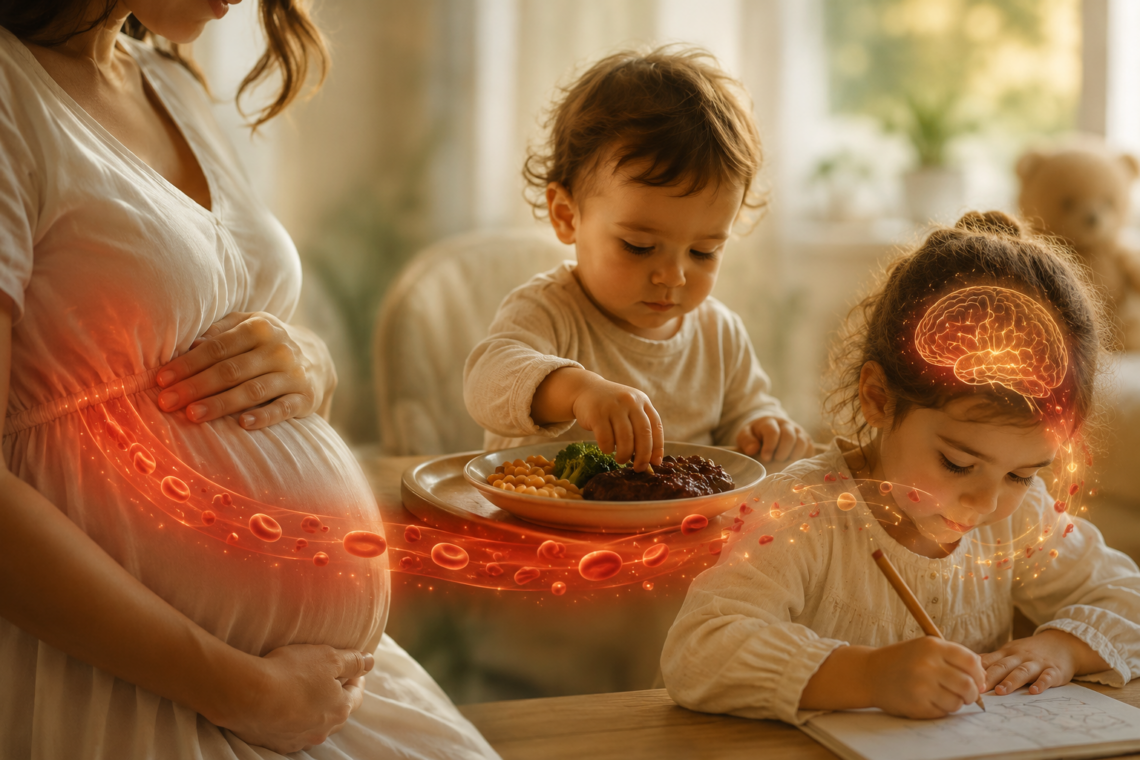
In many ways, it begins even before pregnancy itself. Entering pregnancy with adequate iron stores can help support both maternal health and the extraordinary changes that lie ahead. Throughout pregnancy, iron requirements increase significantly as a mother’s body works to support a growing baby, an expanding blood supply, and the developing placenta. At the same time, babies are quietly building their own iron reserves, drawing on maternal iron to create stores that will help support growth during the first months.
For this reason, adequate iron intake during pregnancy is particularly important.
Iron deficiency may increase the risk of maternal anaemia and has been associated with complications such as preterm birth, low birth weight, and poor maternal recovery following birth. At the same time, more is not always better. While iron supplementation is often recommended during pregnancy, it should always be discussed with a healthcare professional, as excessively high iron intake may also carry risks. Like many aspects of nutrition, the goal is not simply to consume as much as possible, but to achieve the right balance for both mother and baby.
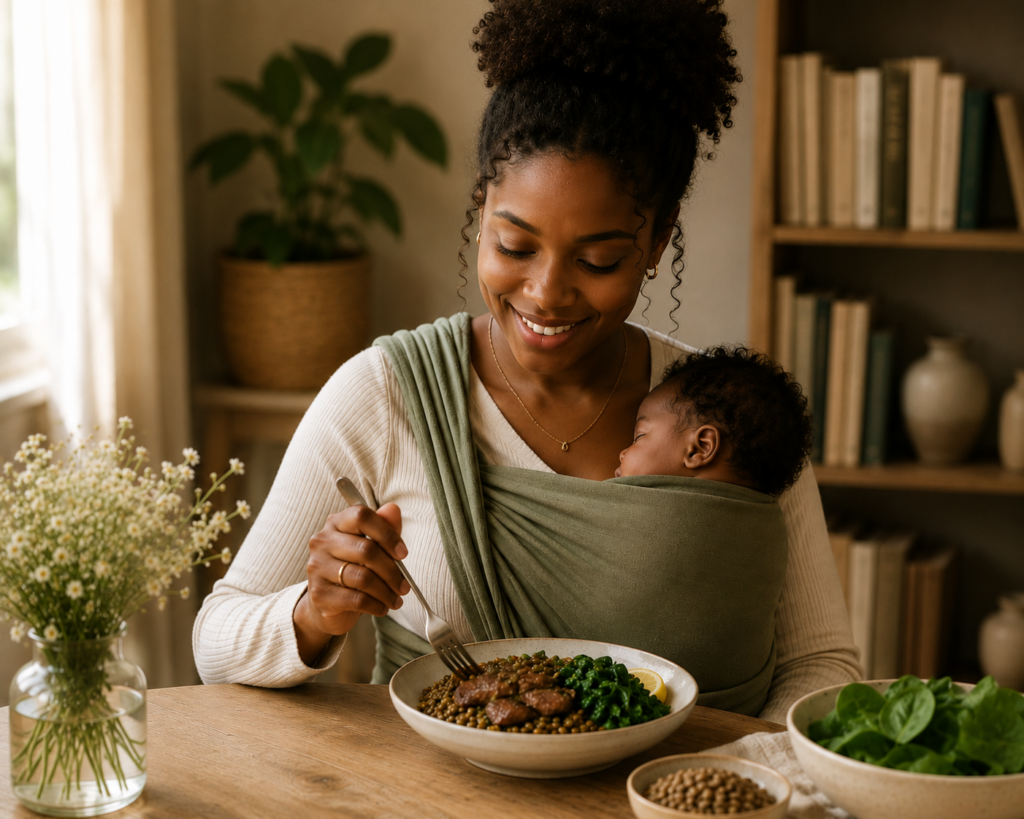
After birth, breast milk continues this remarkable story. Although breast milk contains relatively small amounts of iron, the iron it provides is highly bioavailable, meaning babies can absorb it very efficiently. Together with the iron stores accumulated during pregnancy, this helps support healthy growth throughout the early months of life. Of course, this does not mean that breastfeeding mothers need to dramatically increase iron-rich foods in an attempt to “boost” the iron content of their milk. The body regulates breast milk composition remarkably well.
Rather, maintaining adequate iron intake during the postpartum period remains important for supporting the mother’s own health, recovery, energy levels, and overall wellbeing during this demanding stage of life.
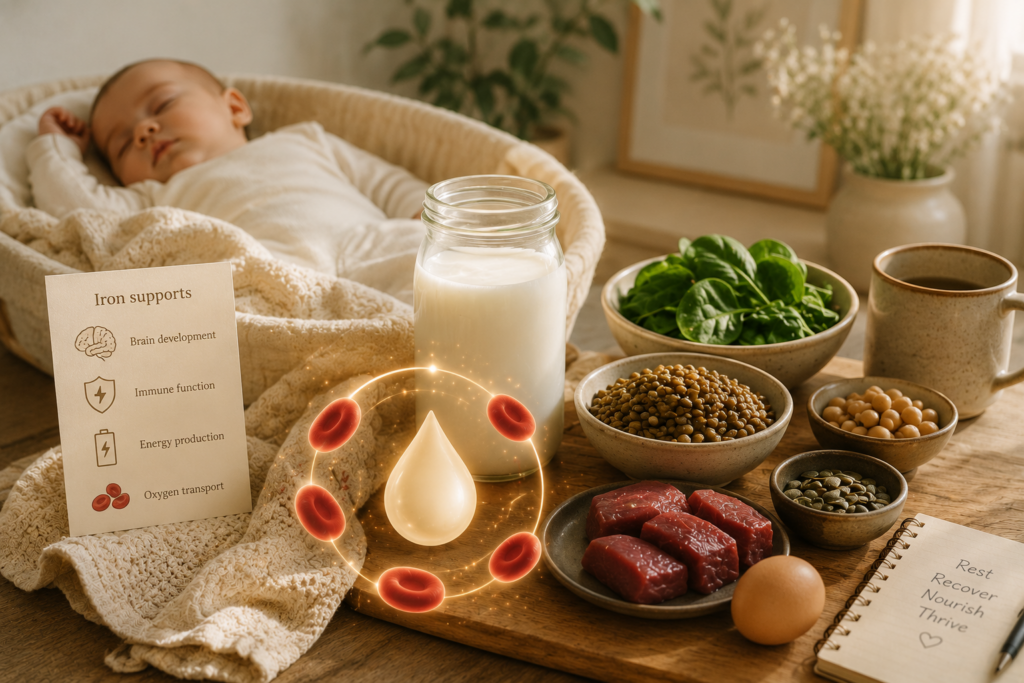
For healthy full-term babies, these iron stores are usually sufficient for around the first six months. As babies grow, however, their iron needs begin to increase rapidly, eventually exceeding what these reserves alone can provide. This is where iron-rich complementary foods become an important part of the weaning journey.
Iron is often considered a priority nutrient during infancy for good reason.
Growth is occurring at an extraordinary pace, particularly within the brain, where iron supports oxygen transport, energy production, learning, memory, and neurological development. Interestingly, many traditional first foods around the world naturally reflected this need long before anyone understood the science behind it. Slow-cooked meats, nourishing broths, egg yolks, legumes, and iron-rich family meals often appeared early in a baby’s diet because generations of parents had observed that these foods helped children grow and thrive.
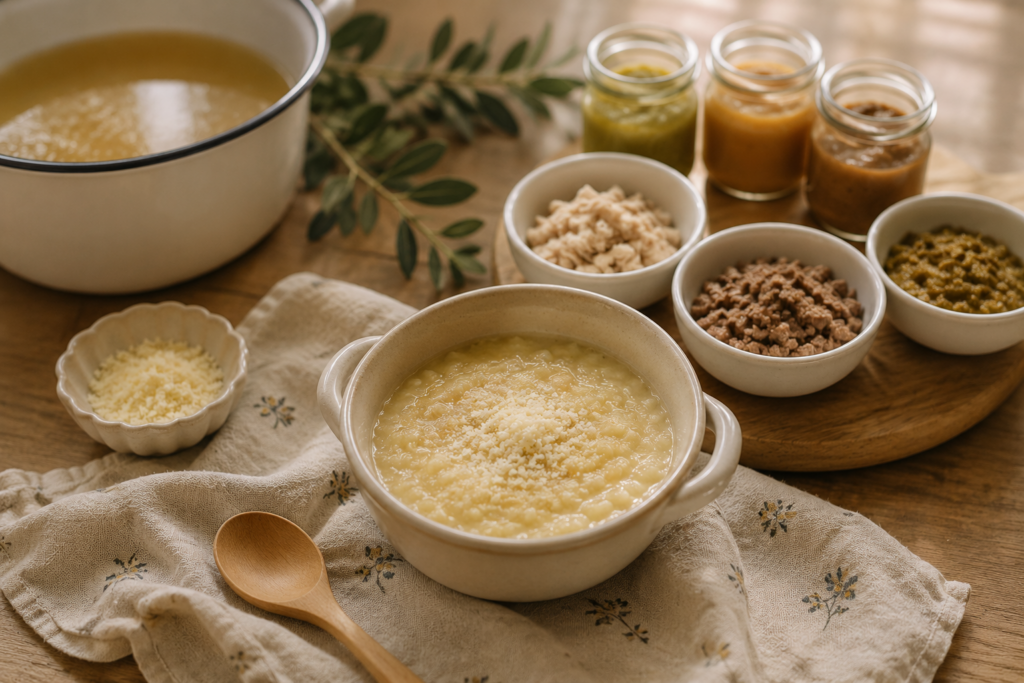
In Italy, this often took the form of simple but nourishing first meals built around homemade broth. Many families would gradually introduce iron-rich foods by adding small amounts of beef, veal, chicken, lentil, or mixed-legume omogeneizzati to a warm bowl of broth, often combined with semolino, polenta, cream of rice, or tiny pasta shapes, and a sprinkle of Parmigiano would frequently complete the meal.
Warm, gentle, and easy to eat, these first meals may appear surprisingly simple to someone unfamiliar with traditional Italian weaning. Yet they provided a practical way to introduce important nutrients, including iron, protein, and energy, while respecting a baby’s developing digestive system and oral skills.
Iron on the Plate
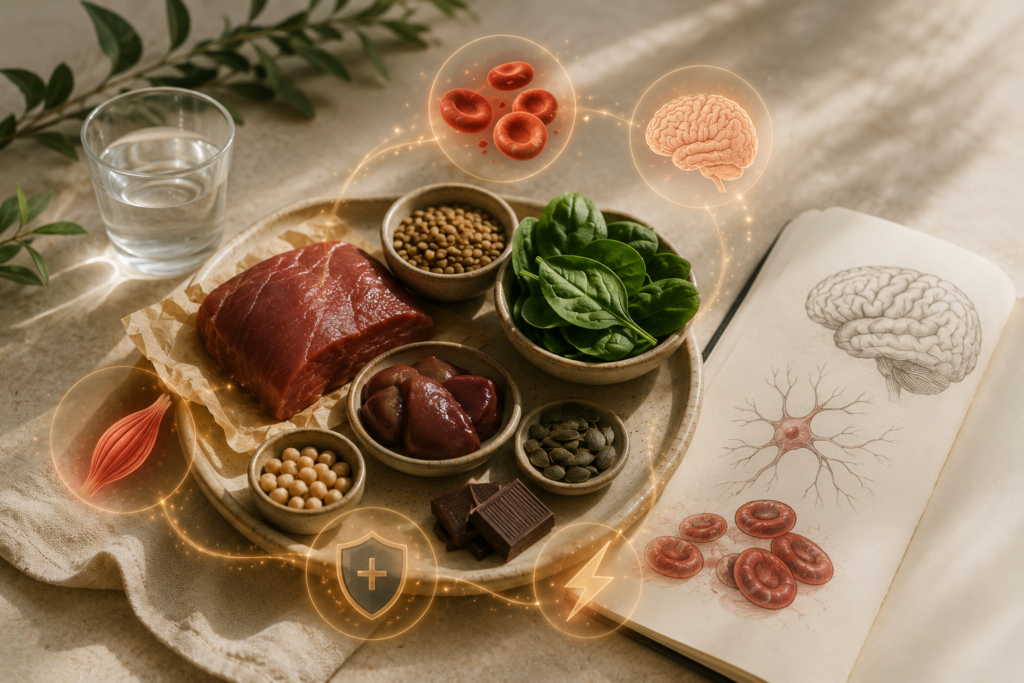
Iron can be found in both animal and plant foods, but not all iron is absorbed in the same way. The iron found in foods such as beef, lamb, poultry, fish, and eggs is known as heme iron, a form that tends to be more easily absorbed by the body.
Plant foods such as lentils, beans, chickpeas, whole grains, nuts, seeds, and leafy greens also provide iron, along with fibre and many other valuable nutrients.
This form, known as non-heme iron, can be a little more difficult for the body to absorb, but there are simple ways to help improve its availability.
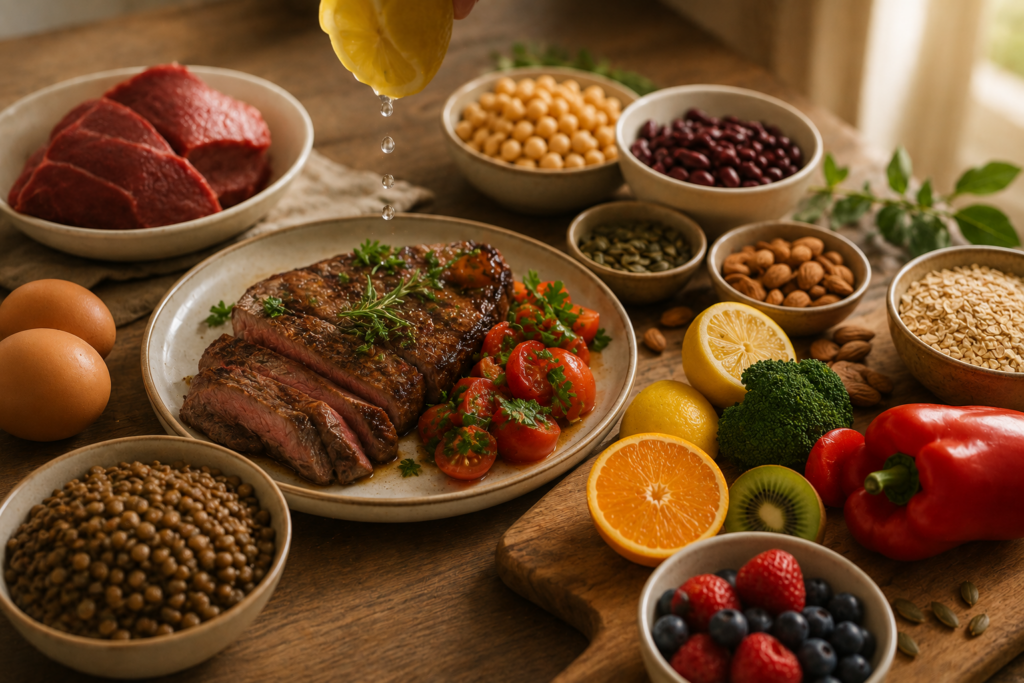
This is where vitamin C becomes iron’s best friend. Pairing iron-rich foods with ingredients such as tomatoes, capsicum, citrus fruits, berries, kiwi fruit, or even a simple squeeze of lemon can help the body absorb more iron, particularly from plant foods. In many Italian families, it is still common to squeeze fresh lemon juice over meat or fish dishes, vegetables, legumes, or salads. Most people probably do it for the flavour, because that’s how their parents and grandparents did it, but it also happens to be a wonderful example of traditional food wisdom aligning beautifully with modern nutritional science.
At the same time, some foods and compounds can make iron absorption a little more difficult. Large amounts of calcium, particularly from milk and dairy products consumed alongside iron-rich meals, may reduce the absorption of non-heme iron. Tea and coffee contain compounds called tannins that can have a similar effect, which is one reason why they are often best enjoyed away from meals. Legumes and whole grains also naturally contain substances known as phytates, which can slightly reduce iron absorption. Fortunately, traditional preparation methods such as soaking legumes before cooking, fermenting grains, and combining meals with vitamin C-rich foods can help minimise these effects.
Once again, science is helping explain something that many family kitchens had quietly understood for generations: sometimes the most nourishing meals are not about a single ingredient, but about how foods work together on the plate.
What Pregnancy Taught Me About Iron
Before becoming pregnant, I had followed a predominantly vegetarian diet for many years and continued doing so during the early months of pregnancy.
Iron was a nutrient I knew about, of course, but it was not something I spent much time thinking about on a daily basis.
That changed when my blood tests showed that my iron levels needed more support.
For the first time, I found myself looking at my plate a little differently. Not with fear, and not with the feeling that I had been doing something wrong, but with greater awareness. I did not abandon the Mediterranean way of eating that I loved.
Instead, I adapted it. I continued eating mostly plant-based foods while consciously including small amounts of iron-rich animal foods, particularly venison, alongside the legumes, vitamin C-rich vegetables, whole grains, and olive oil that were already part of my diet.
Probably, that experience, taught me one of the most important lessons in nutrition: sometimes the goal is not perfection, but adaptation. Listening to our bodies, understanding our needs, and using food thoughtfully rather than rigidly.
Once again, science is helping explain something that many family kitchens had quietly understood for generations: some of the most nourishing meals are not built around a single nutrient, but around a pattern of foods working together.
Perhaps this is what makes iron such a remarkable nutrient. It works quietly, we rarely see it , and we rarely think about it.
Yet from the very beginning of life, it helps build the foundations that allow children to grow, learn, explore, and thrive.
Like many of the most important things in life, its work happens largely behind the scenes, one bite at a time!
For more recipes, traditions, and evidence-based reflections on pregnancy, childhood, and family nutrition, follow along on Instagram and here on the blog.
Thank you for reading and for being part of the Little Brave Celery family, Ciao!