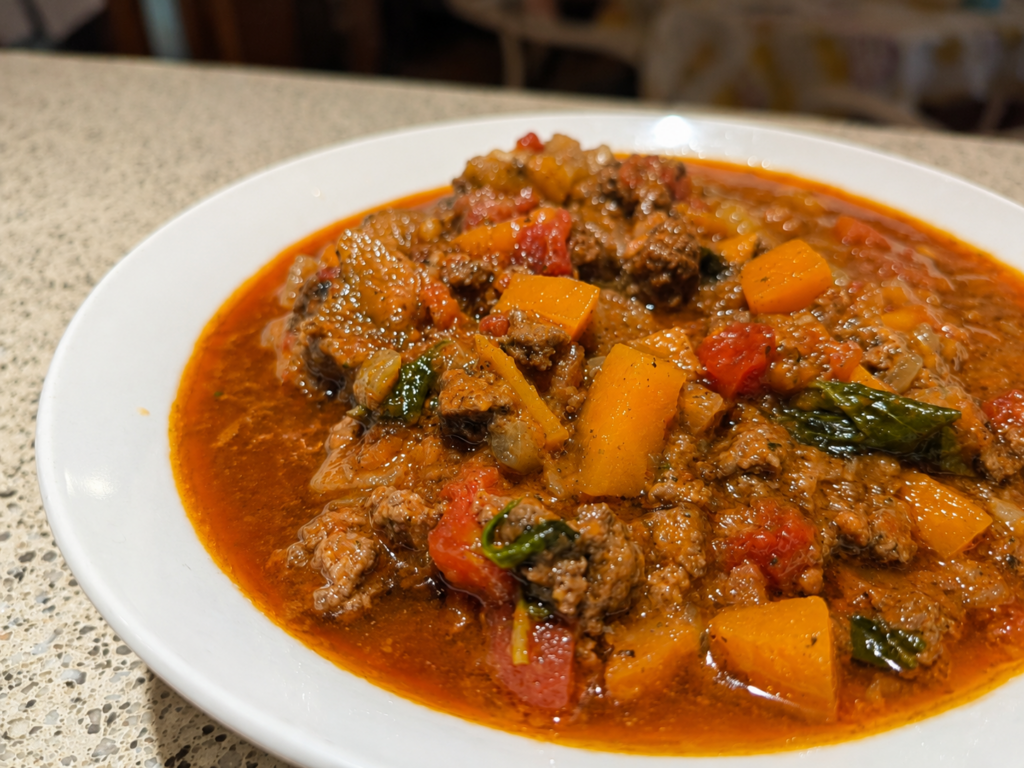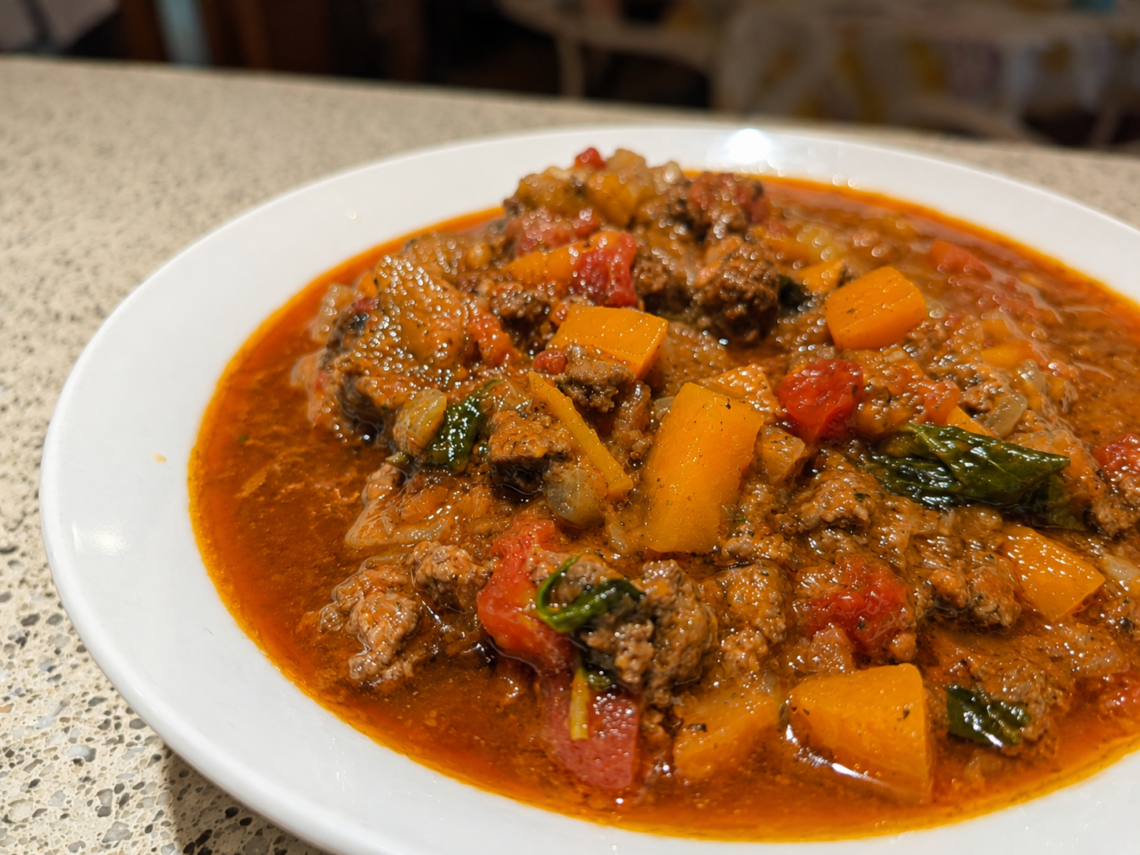
Ragù
Ask an Italian how to make Ragù, and you will probably receive three recipes, four opinions, and a story about someone’s Nonna.
For many people around the world, Ragù immediately brings to mind Ragù alla Bolognese, the rich, slow-cooked meat sauce traditionally served with fresh egg tagliatelle or layered into lasagne. Considered one of the great symbols of Italian home cooking, its official recipe was even formally deposited by the Accademia Italiana della Cucina at the Chamber of Commerce of Bologna in April 2023, preserving a recognised version built on specific ingredients, balanced proportions, and a precise cooking method.
Yet, like all truly Italian traditional recipes, Ragù has never existed as one single fixed dish, because beyond the official version, every family has its own. Travel further south and Ragù changes completely. In Naples, Ragù alla Napoletana becomes the great protagonist of Sunday lunches, a sauce slowly simmered for hours, filling the house with rich aromas long before anyone sits at the table. Unlike the finer Bolognese version, Neapolitan Ragù is often built from whole cuts of meat: pork ribs, beef, sausages, braciole, and deeply flavoured tomato sauce, gently “coccolato”, cared for and watched over, as it bubbles slowly throughout the day. And of course, no Neapolitan would forget the cozzetto of bread at the end, used for the final scarpetta to gather every spoonful of sauce from the plate.
But perhaps the most beautiful thing about Ragù is exactly this: from the far north of Italy to the deep south, every region, every town, and every household carry its own version and its own idea of this “perfect” sauce.
From Ragoût to Ragù
Ragù is one of the most recognisable dishes in Italian cuisine today, yet its origins are far more complex than many people realise. Like much of Italian food culture, Ragù was not born as one single recipe, but evolved gradually over centuries, shaped by regional traditions, ingredients available, and the rhythms of family life. Even the word Ragù itself tells part of the story. It comes from the French word Ragoût, used to describe rich, slow-cooked stews of meat and vegetables. During the 18th century, French culinary influence entered the kitchens of Italian aristocracy, particularly in northern regions connected to noble courts and trade routes. Over time, Italian cooks adapted the idea, transforming it into something entirely their own. Unlike the French Ragoût, often served as a stew on its own, Italian ragù gradually became linked to pasta or polenta. Slow-cooked meats, vegetables, wine, aromatics, and eventually tomatoes were transformed into sauces designed not simply to accompany food, but to become part of it.
Importantly, early Ragù was not always the tomato-heavy sauce many people imagine today. Tomatoes themselves arrived in Europe after the Columbian exchange and took centuries to become fully integrated into Italian cooking (learn more HERE). Earlier ragù preparations relied more on meat, broth, spices, and aromatics, with tomato becoming increasingly central later on, particularly in southern Italy. Over time, different regions developed their own identities around Ragù. In some parts of Italy, Ragù may include duck, rabbit, sausage, wild boar, mushrooms, pancetta, peas, legumes, or even liver. Some versions are lighter and more tomato-forward, others richer and darker. Some simmer all day, while others have adapted to modern life and are made more quickly, coming together in a couple of hours.

Ragu’ and the first 1000 days
Ragù adapt beautifully through the first 1000 days, from pregnancy to early childhood, because at its heart, it is already built on balance, softness, and slow flavour. A traditional Ragù begins not with meat alone, but with vegetables, olive oil, and herbs, creating a rich base that can easily be adjusted depending on age and needs. For babies, it can be served with tiny pasta shapes, blended smoother, or adapted with gentler flavours and simpler ingredients depending on age and stage. For toddlers, it often becomes one of the first true “family sauces” shared at the same table as everyone else, helping introduce vegetables, and deeper flavours in a familiar and comforting way.
Even from a nutritional perspective, Ragù reflects many of the ideas behind both the Rainbow Diet and the little Garden Within. Onion, carrot, celery, tomatoes, herbs, olive oil, and sometimes legumes all contribute different fibres, colours, and plant compounds, creating diversity within a single meal. During pregnancy and the postpartum period, Ragù can offer something practical too. It freezes well, reheats beautifully, and can become the kind of nourishing meal that is ready when energy or time are low. Some families enrich it with extra vegetables or legumes, others keep it very traditional, but the philosophy remains the same: simple ingredients, and food designed to feed people well over time. That is part of why Ragù has stayed in Italian kitchens for generations, it grows with the family.
My Family Ragù
I grew up with two Nonna’s from different parts of the same city, Piacenza, and somehow, two completely different Ragù sauces. My paternal Nonna made a rich, deeply layered ragù: different minced meats, pork, veal, and beef, sausages, and often the little leftover cuts of cured meats forgotten at the back of the fridge, things like mortadella, pancetta, prosciutto cotto, or salame. Her soffritto was generous, cooked slowly with lard and butter, followed by tomatoes, red wine, sometimes a touch of milk, and then left to simmer not for hours, but almost for a day. My other Nonna version was different. Faster, simpler, perhaps more modern. A quick soffritto with olive oil and a little butter, mostly beef mince, sometimes some pork sausage, tomatoes, red wine, and that was enough. Nothing complicated, just something practical, nourishing, and still deeply connected to traditional cooking. And where I grew up, Ragù was often served with polenta even more than fresh pasta. Warm, soft, comforting polenta has always been one of those foods loved by children and adults alike, especially during colder months, and many of my memories of Ragù are tied more to steaming bowls of polenta than to tagliatelle.
Today, I’m sharing the faster version, the one I make every now and then to remember both of my Nonna in my own way, while slowly and deliciously helping my son discover his roots. And like many traditional recipes, I truly believe you should make it your own too. Serve it with pasta, polenta, rice, orzo, gluten-free pasta, chickpea or lentil pasta, or whatever works best for your family and your needs.
Because that is the real beauty of traditional cooking: there is rarely one single perfect recipe. The heart of the dish stays the same and everything else slowly adapts around the table
Mani in Pasta it’s Time to Cook!
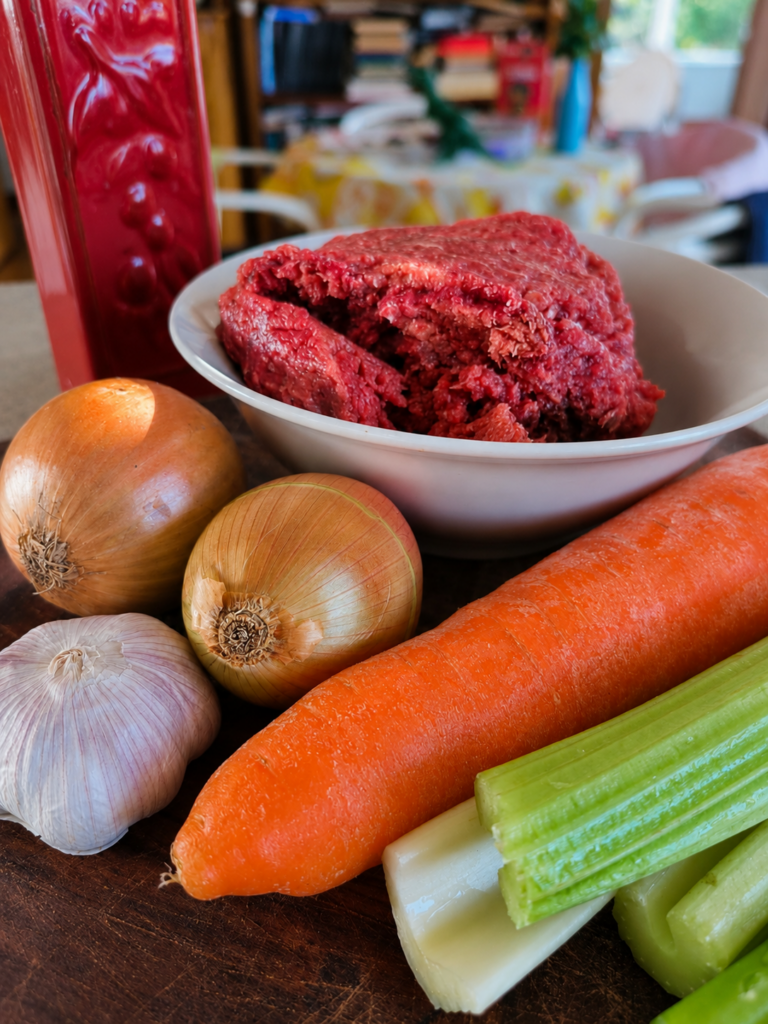
Ingredients (Serves 4–6)
- 500 g beef mince
- 80 g carrots
- 80 g celery
- 80 g golden onion
- 4 garlic cloves
- 2 tins chopped tomatoes
- 1 glass red wine
- 200/300 ml bones broth or water
- 4 tablespoons extra virgin olive oil
- 1 small knob of butter (50/60 g)
- Salt and black pepper, to taste
Optional additions:
- Pork sausage, for a richer flavour
- A splash of milk near the end, inspired by traditional Bolognese-style Ragù
- Mushrooms, peas, or extra vegetables for more variety
- A Parmesan rind simmered gently in the sauce
- Fresh herbs such as rosemary, basil, bay leaves, or thyme
Instructions
Prepare your flavour base: Start by chopping the onion, celery, carrots, and garlic for the soffritto. Traditionally these vegetables are chopped very finely, but my version is a little more rustic and I like to leave the pieces slightly chunkier for extra texture and flavour. If you are cooking for little eaters, or simply prefer a smoother sauce, you can finely chop or even pulse the vegetables in a food processor and break the mince into much smaller pieces while cooking.
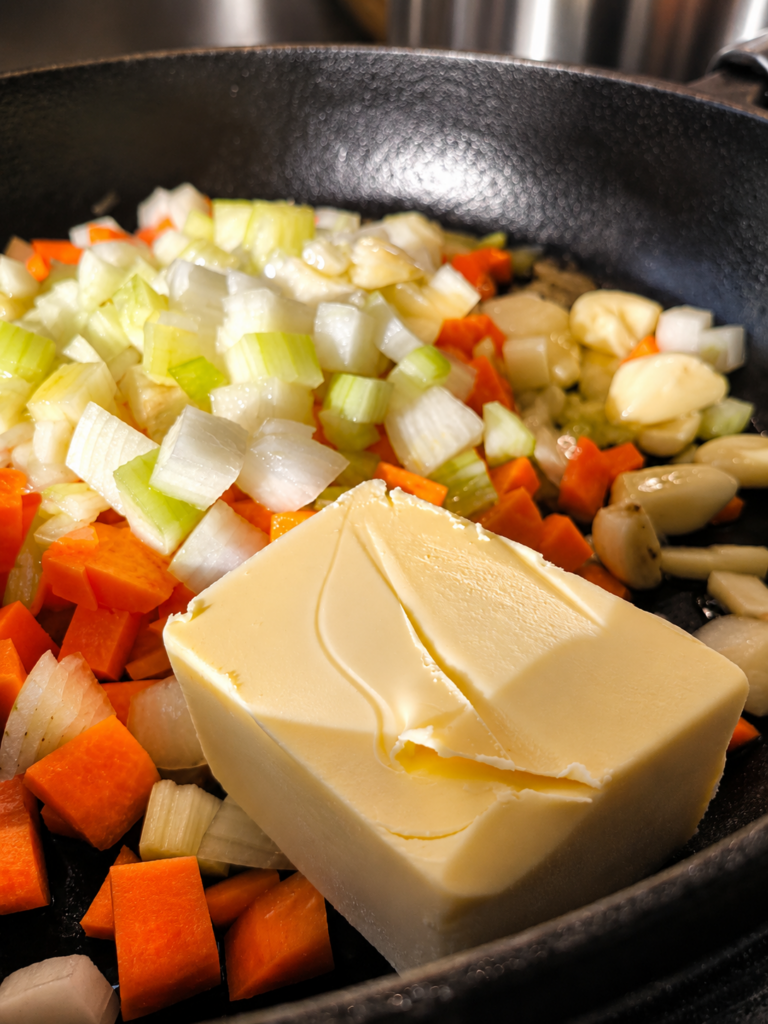
Build the soffritto: Place the onion, celery, carrots, garlic, and any fresh herbs you would like to use into a large heavy pan or pot with the olive oil. As the pan slowly begins to warm up, add the butter and let everything cook gently together over medium-low heat for about 8–10 minutes, stirring often.
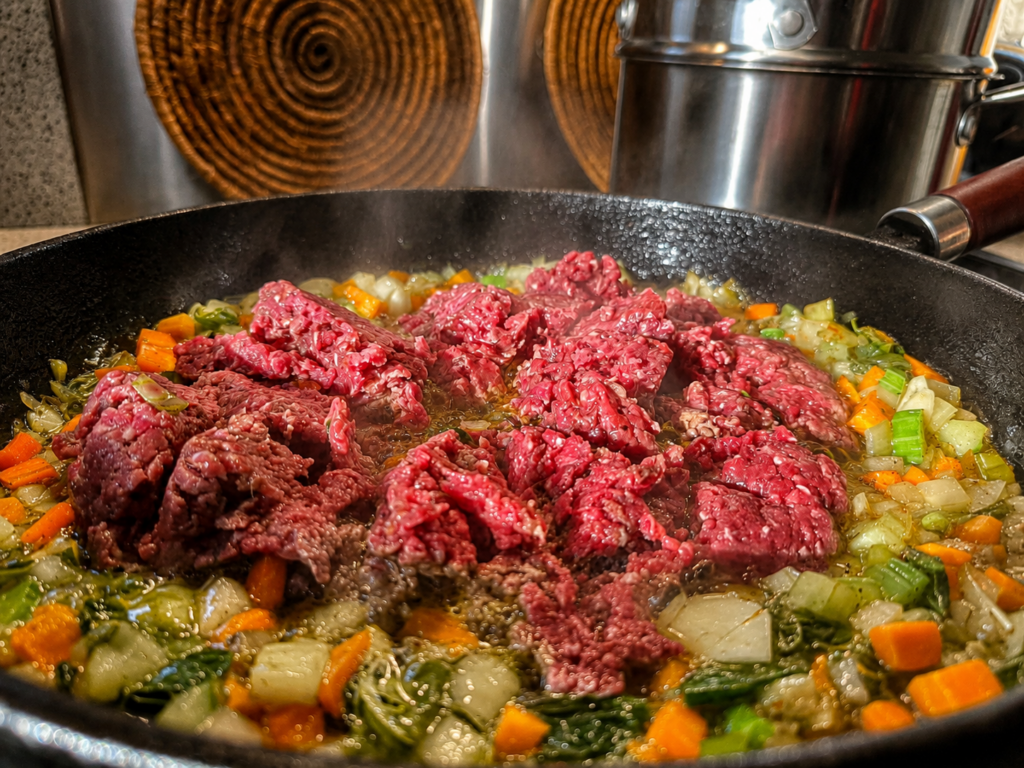
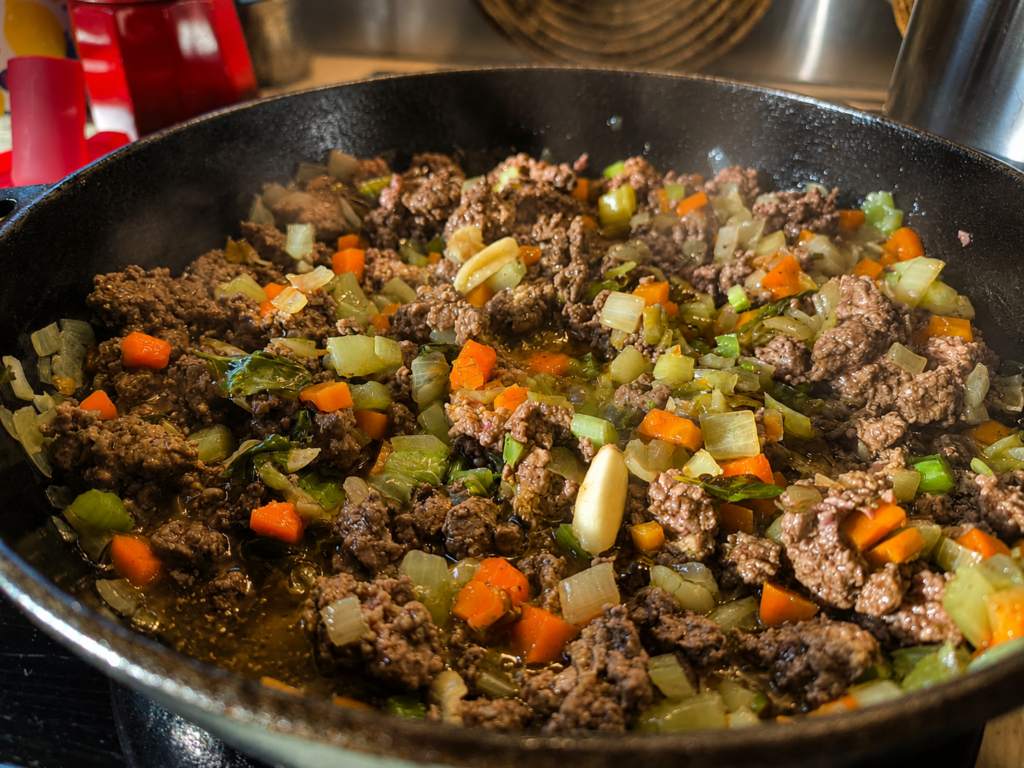
Cook the meat: Increase the heat slightly and add the beef mince. Break it up with a wooden spoon and cook for about 10 minutes, until browned and fragrant.
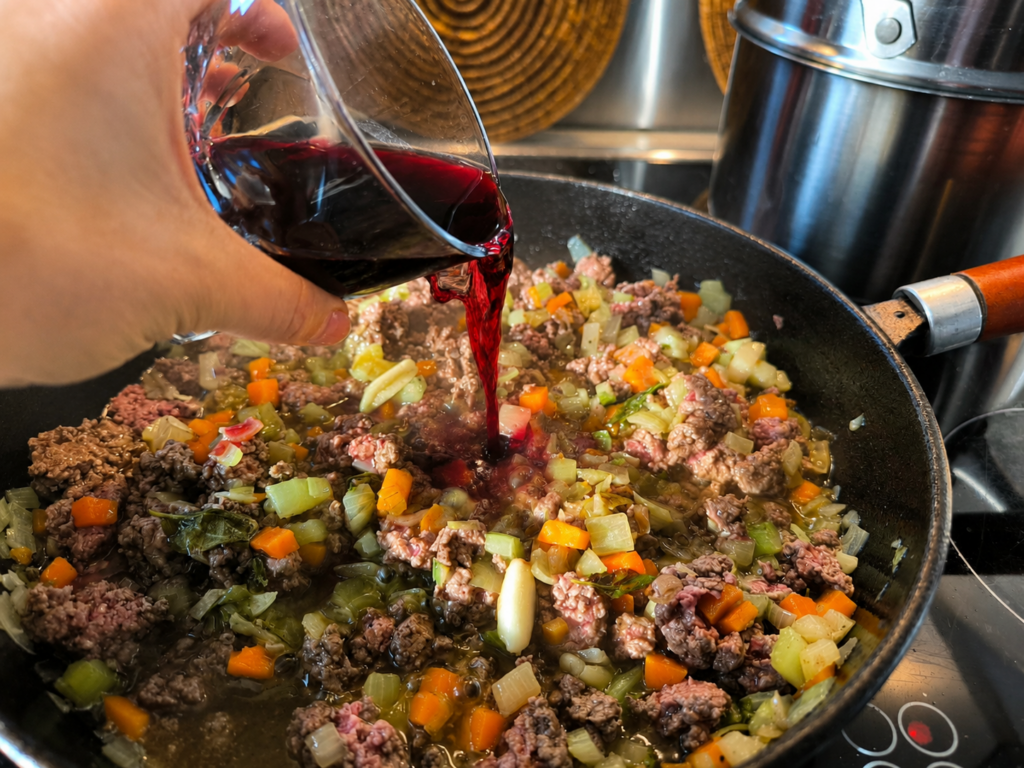
Add the wine: Pour in the red wine and allow the alcohol to evaporate for a few minutes while stirring gently. And yes, I know what some people might be thinking: red wine for children? Of course, you can completely skip it and simply use a little extra broth or water instead. But just to reassure you, the wine is traditionally used for flavour and aroma, and after a long simmer there should not be the same alcohol content present as in the raw wine itself. Cooking with a little wine for family meals has also long been part of Italian culinary tradition. For many Italian families, it is simply another ingredient used to build flavour slowly and bring balance to the sauce.
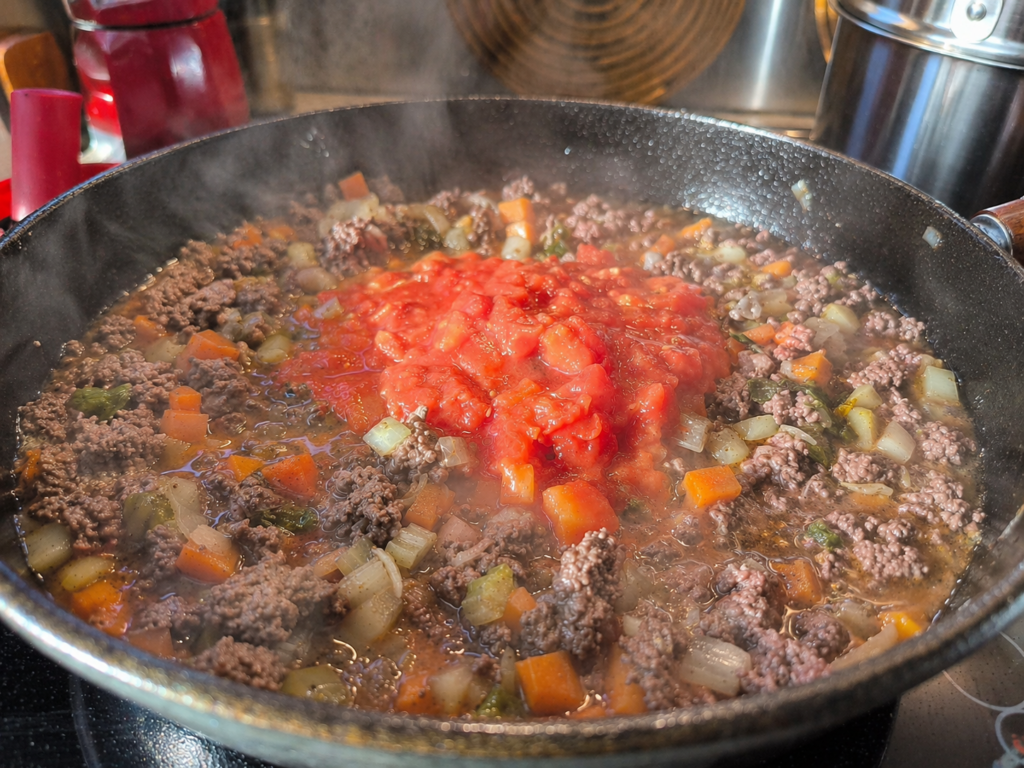
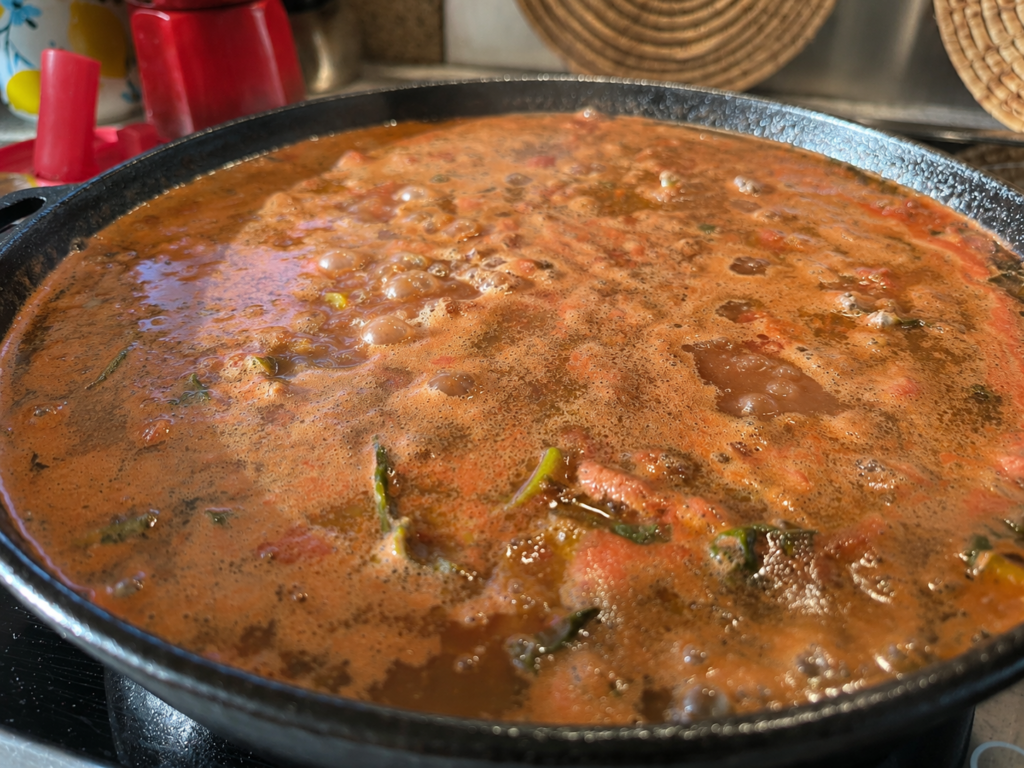
Add the tomatoes: Add the chopped tomatoes and vegetable broth. Mix well and bring everything to a gentle simmer.
Slow cooking matters: Lower the heat, partially cover with a lid, and let the Ragù cook slowly for about 1 hour, stirring from time to time. If the sauce thickens too much, add a little extra broth or water. Traditionally, some ragù sauces simmer for many hours, sometimes almost all day. My version is faster and more adapted to modern life but, still keeps the same philosophy: building flavour slowly, one layer at a time.
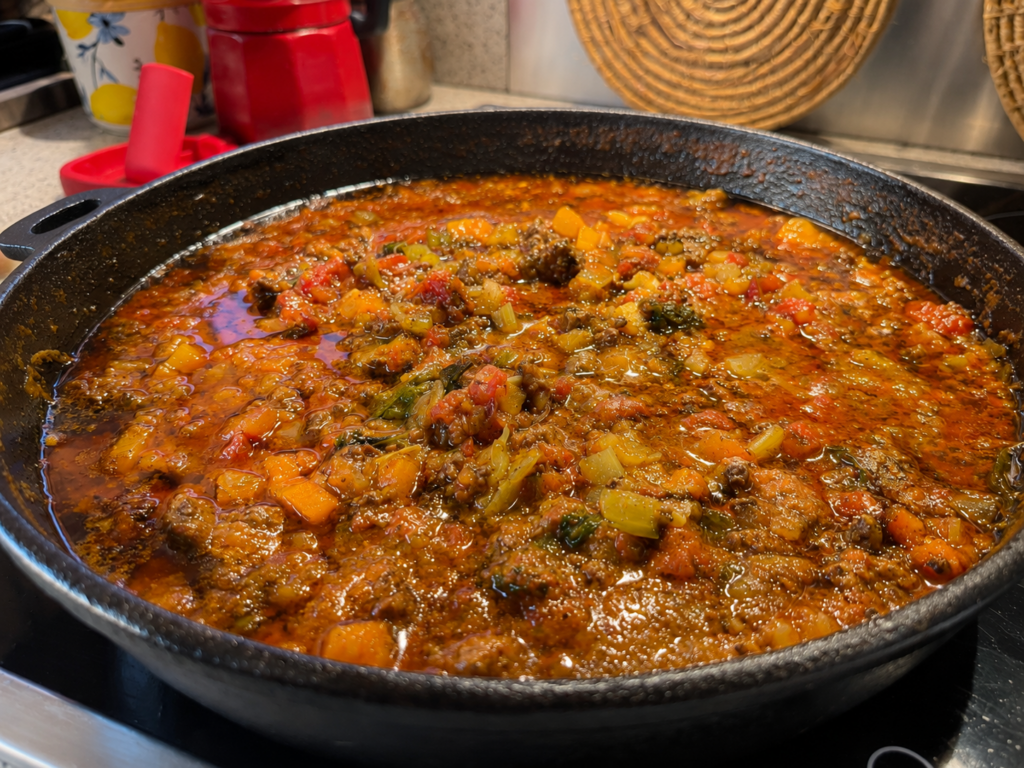
Check and adjust: Taste and season with salt and black pepper as needed. The final sauce should feel rich, soft, and well balanced.
Storage: Ragù keeps beautifully, which is one of the reasons it has remained such a practical family recipe for generations. Store it in an airtight container in the fridge for up to 2–3 days, then simply reheat when needed. Ragù is even better the next day, once the flavours have had more time to settle and deepen. It also freezes very well for around 2–3 months. I often freeze small portions for busy days, quick family meals, or simply for those moments when having something homemade already waiting can make life feel a little easier.
To serve: Serve with your favourite pasta, polenta or layered into lasagne, and don’t forget the Parmigiano. Some things are simply part of the ritual.
Ragù has a way of becoming part of the rhythm of a home. It carries memories, routines, Sunday lunches, freezer containers waiting for busy days, children asking when lunch will be ready, and the smell of sauce lingering softly through the house long after the meal is over.
And whether your version is rich and slow like one Nonna, or quicker and simpler like another’s, perhaps what matters most is not following every traditional rule perfectly, but continuing the gesture itself, cooking, sharing, adapting, and feeding the people you love.
Because in the end, that is what recipes like Ragù were always meant to do, one bite at the time!
Follow along as we continue exploring traditional food, Mediterranean nourishment, and the stories that slowly grow around the family table.
Thank you for reading and for being part of the Little Brave Celery family, Ciao!