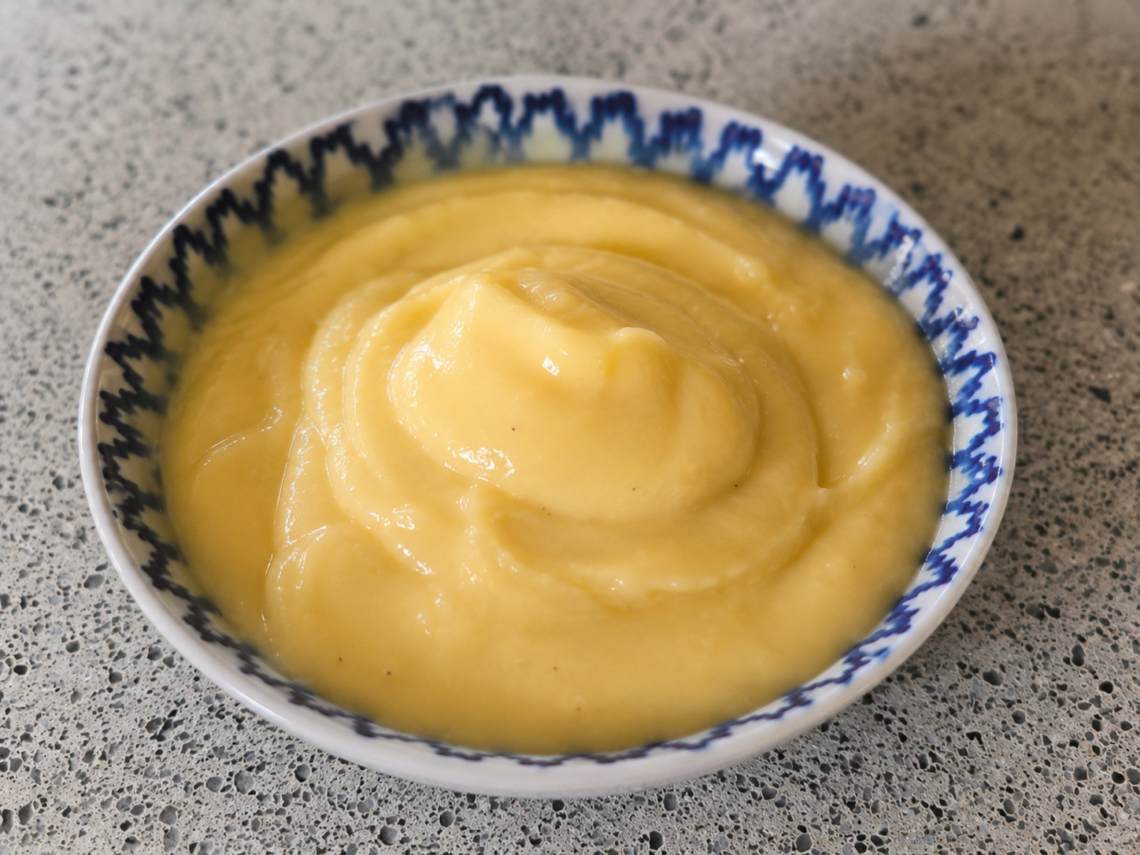
Crema Pasticcera
Few ingredients, endless memories.
Milk, eggs, sugar, vanilla, and a little patience slowly transforming into one of the most loved preparations in Italian pastry tradition. Smooth, velvety, rich without feeling heavy, this simple custard cream quietly lives at the centre of countless Italian desserts: cream puffs, mille-feuille, fruit tarts, birthday cakes, spoon desserts, cannoncini, and crostate brought to the table during celebrations, Sunday lunches, and family gatherings.
But honestly, crema pasticcera is rarely remembered only for the desserts themselves. It is the child waiting impatiently beside the stove while somebody stirs the cream, the spoon stolen before it has fully cooled, the smell of warm milk and vanilla slowly filling the kitchen, or the pastries wrapped carefully in paper on Sunday mornings from the Pasticceria. Like many traditional Italian recipes, crema pasticcera becomes part of family life long before we realise we are creating memories around it.
A Cream with Centuries of History
Although we now think of crema pasticcera as one of the great classics of Italian pastry, the story of custard-like creams stretches far back through European and Mediterranean history. Long before modern pastry shops existed, cooks were already experimenting with the simple transformation of milk, eggs, and sweeteners into soft creams and fillings capable of enriching breads, pies, and desserts.
Versions of thickened milk-and-egg preparations appeared as early as the Middle Ages, particularly within aristocratic kitchens and convent baking traditions, where eggs and dairy played an important role in both savoury and sweet cooking.
As trade routes expanded across the Mediterranean, ingredients such as sugar, vanilla, citrus, cinnamon, and spices slowly became more available, influencing the evolution of European pastry traditions and allowing creams and custards to become increasingly refined over time.
During the Renaissance, Italy became one of the great centres of pastry craftsmanship. Courts, monasteries, and regional kitchens developed elaborate desserts where creams similar to modern Crema Pasticcera began appearing more frequently inside pastries, layered cakes, and delicate sweets served during celebrations and religious festivities. Later, French pastry traditions would further refine many custard techniques, but throughout Italy, pastry cream remained deeply rooted in family baking and regional dessert culture.
Maybe, this is part of what makes crema pasticcera feel so timeless even today.
It represents something deeply characteristic of traditional Italian cooking itself:
the ability to transform a few humble ingredients into something elegant, comforting, and unforgettable, becoming one of the most recognisable and beloved textures in pastry history.
One Spoonful at a Time
Although Crema Pasticcera appears simple, there is a remarkable amount of chemistry happening quietly inside the saucepan. Traditional pastry cream is a delicate balance of proteins, fats, starches, heat, and movement, all working together to create its characteristic smooth and velvety texture. Eggs contribute proteins, fats, fat-soluble vitamins, and nutrients such as choline, which plays an important role in brain development and nervous system function. Milk provides calcium, protein, and additional fats that contribute both nutritionally and structurally to the cream itself, while sugar does more than simply sweeten the mixture, helping influence texture, stability, and overall mouthfeel.
Yet perhaps the most interesting aspect of crema pasticcera is not the science alone, but the role it has traditionally played within family life. Across generations, homemade pastry cream has been part of birthday cakes, fruit tarts, Sunday desserts, and celebrations shared around the table. It was never intended to be an everyday nutritional necessity, nor was it viewed as something to fear.
Instead, it existed naturally within a broader lifestyle built around home cooking, variety, movement, and moderation.
Today, conversations around sugar and children often become highly polarised. Traditional desserts are sometimes treated with suspicion, while many ultra-processed products marketed as “healthy,” “protein-packed,” or “sugar-free” contain long lists of additives, sweeteners, flavourings, and stabilisers. Traditional recipes like crema pasticcera remind us that foods do not need to exist only within extremes of “good” or “bad.”
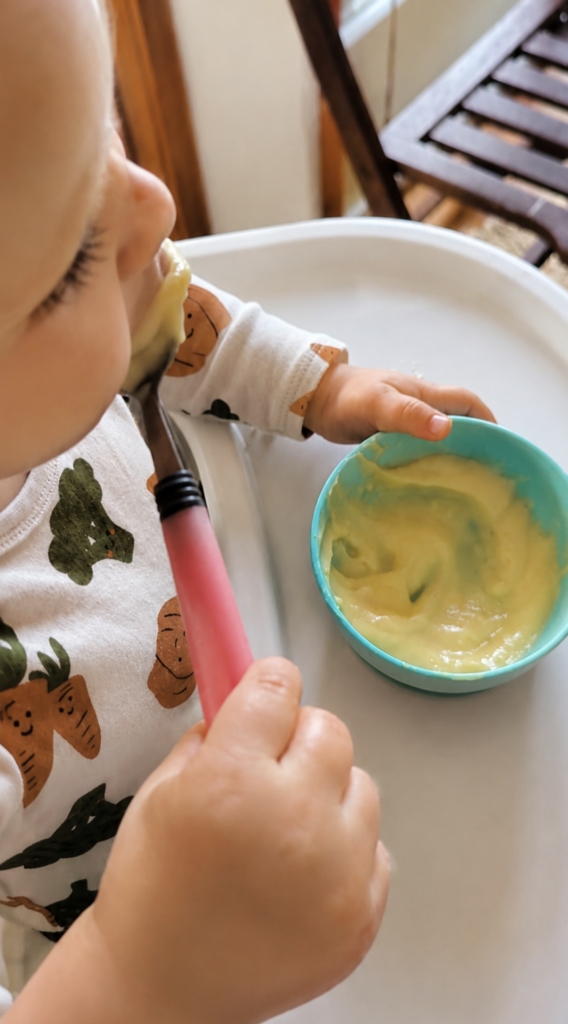
For many children, homemade custards and pastry creams become some of the first sweet foods they encounter during family life. Not because babies need sugar, especially during the first year when added sugars are generally not recommended, but because food begins shaping emotional experiences long before children fully understand nutrition itself. As children grow, sharing a slice of birthday cake, helping whisk eggs beside a parent, or tasting pastry cream inside a fruit tart can introduce sweetness in a way that feels natural, occasional, and connected to family traditions rather than constant everyday exposure.
I still remember making a traditional Italian birthday cake filled with Crema Pasticcera for my son’s first birthday, just as my Mamma used to make for me.
It was one of the first times he had ever tasted something so sweet and creamy.
His little eyes opened wide in surprise, as though he could hardly believe food could taste like that. Watching him discover new flavours, textures, and emotions connected to eating felt incredibly special, not because dessert was necessary, but because it became part of a memory we created together.
This balance matters throughout the first 1000 days and beyond.
During pregnancy, postpartum, and breastfeeding, food is about far more than nutrients alone. It can provide comfort during periods of enormous change, and as babies grow into toddlers and young children, food continues to shape not only physical development but also lifelong relationships with eating. Children benefit from learning to enjoy vegetables, fibre, and nourishing meals, while also developing a calm and realistic relationship with foods associated with pleasure, celebration, and family traditions.
Recipes such as crema pasticcera remind us that food can do many things at once.
It can nourish the body, support growth and development, create memories, strengthen family connections, and bring joy to both parents and children.
Perhaps one of the quiet lessons traditional cooking still offers is that nourishment and pleasure do not need to compete with one another.
There is space for both at the same table.
If you would like another gentle approach to sweetness and tradition, you can also read: Sweetness the Way It Was Meant to Be: Crostata di Mele
And if you ever have the chance to enjoy the two together, a slice of warm Crostata di Mele served with a spoonful of Crema Pasticcera is a truly classic pairing.
The creamy custard complements the tender apples beautifully, creating the kind of simple dessert that Italian grandmothers have been serving for generations.
As we say in Italy, ” al bacio”, a match made in heaven.
Mani in Pasta, it’s Time to Cook!
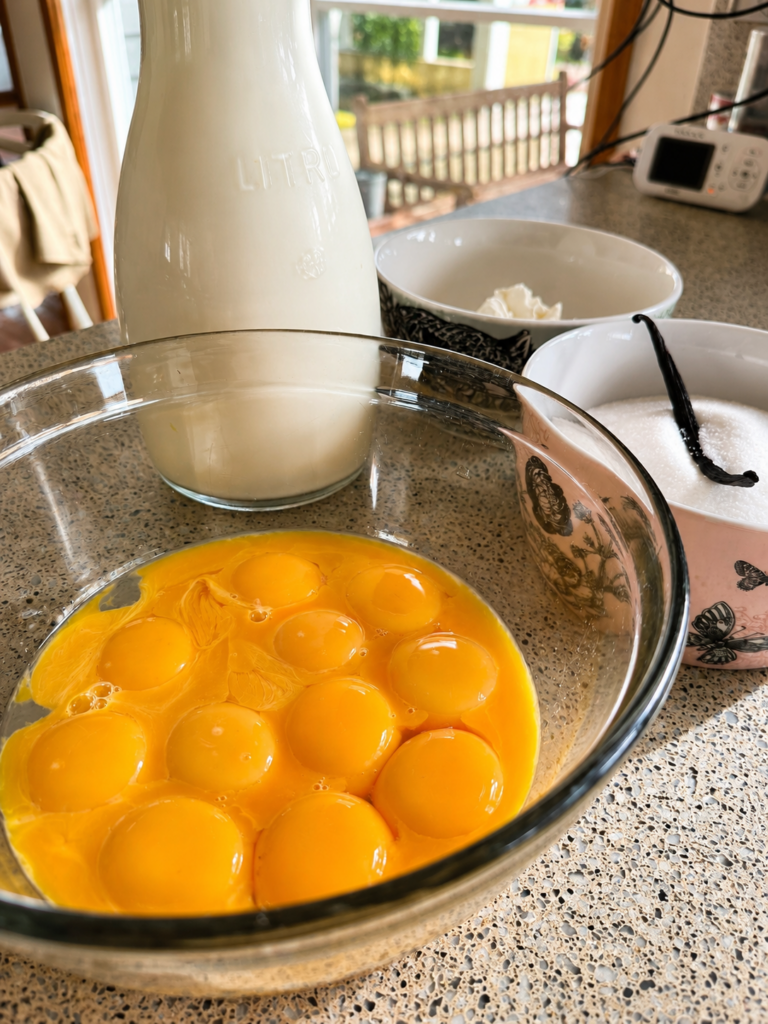
Ingredients
Makes approximately 1.5 kg of pastry cream
- 1 litre whole milk
- 180 g caster sugar (or another sweetener of your choice, if preferred)*
- 10 egg yolks, number 6
- 80 g cornflour (cornstarch)
- 1 vanilla pods
Sweetener Options:
While traditional crema pasticcera is made with sugar, you can experiment with other sweeteners if preferred. Keep in mind that different sweeteners may slightly affect the flavour, colour, and texture of the final cream.
- Honey: use approximately 120–140 g
- Maple syrup: use approximately 150–180 g
- Coconut sugar: substitute 1:1
- Date paste: adds a richer flavour and slightly darker colour
- Unsweetened apple purée: can replace part of the sugar for a milder sweetness
Method
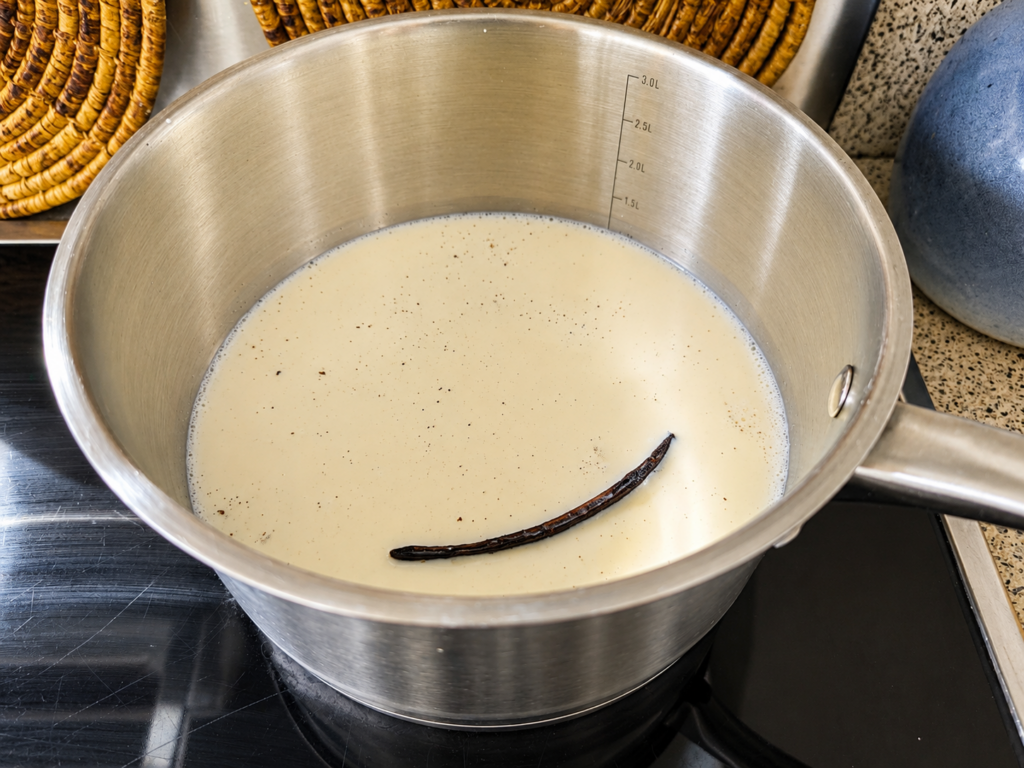
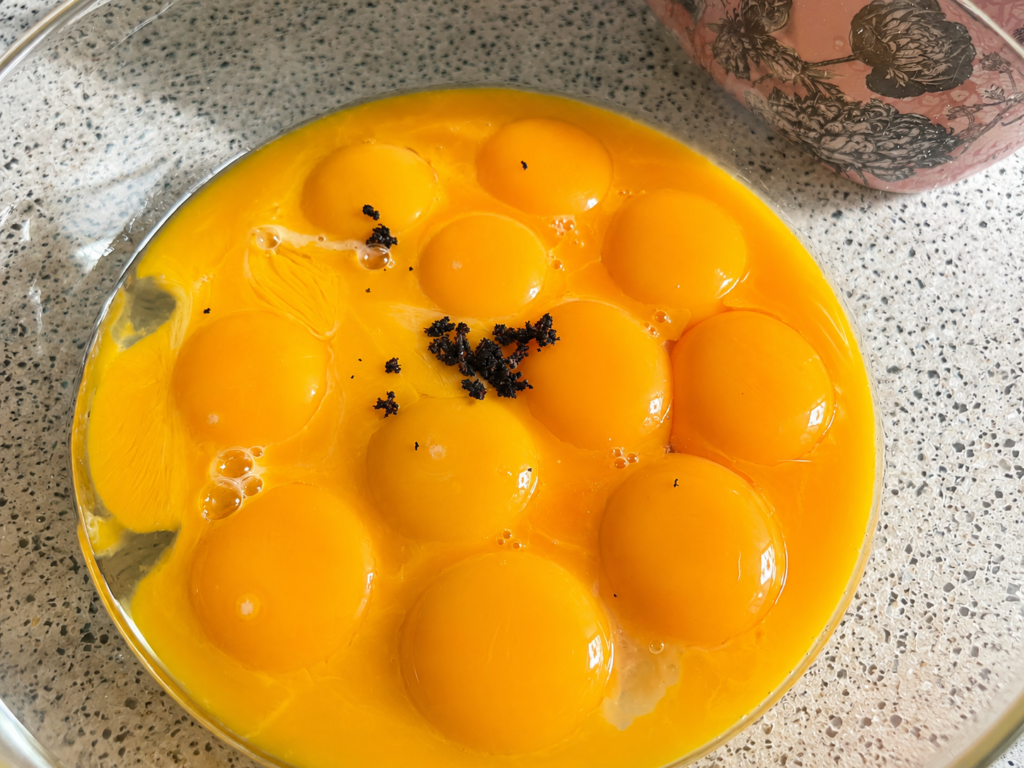
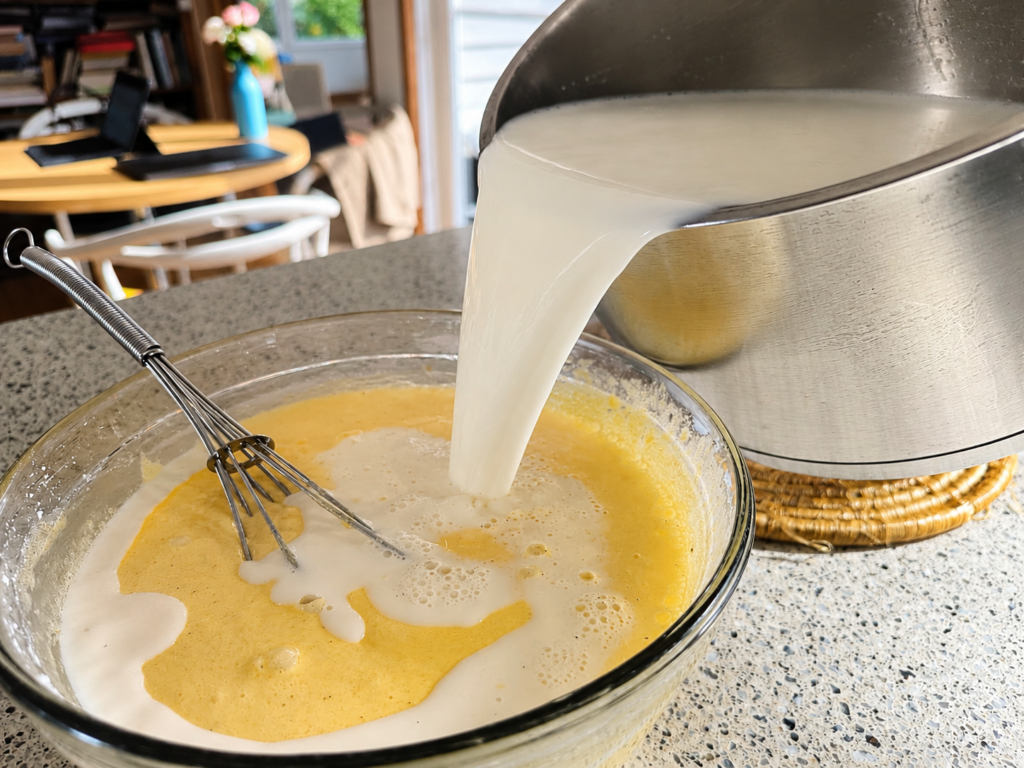
Pour the milk into a saucepan and add the empty vanilla pods. If using lemon peel, add it now. Heat gently over low heat until the milk is hot and just beginning to steam, but do not allow it to boil. While the milk is heating, split the vanilla pods and scrape out the seeds. Place the egg yolks, vanilla seeds, sugar, and cornflour into a large bowl.
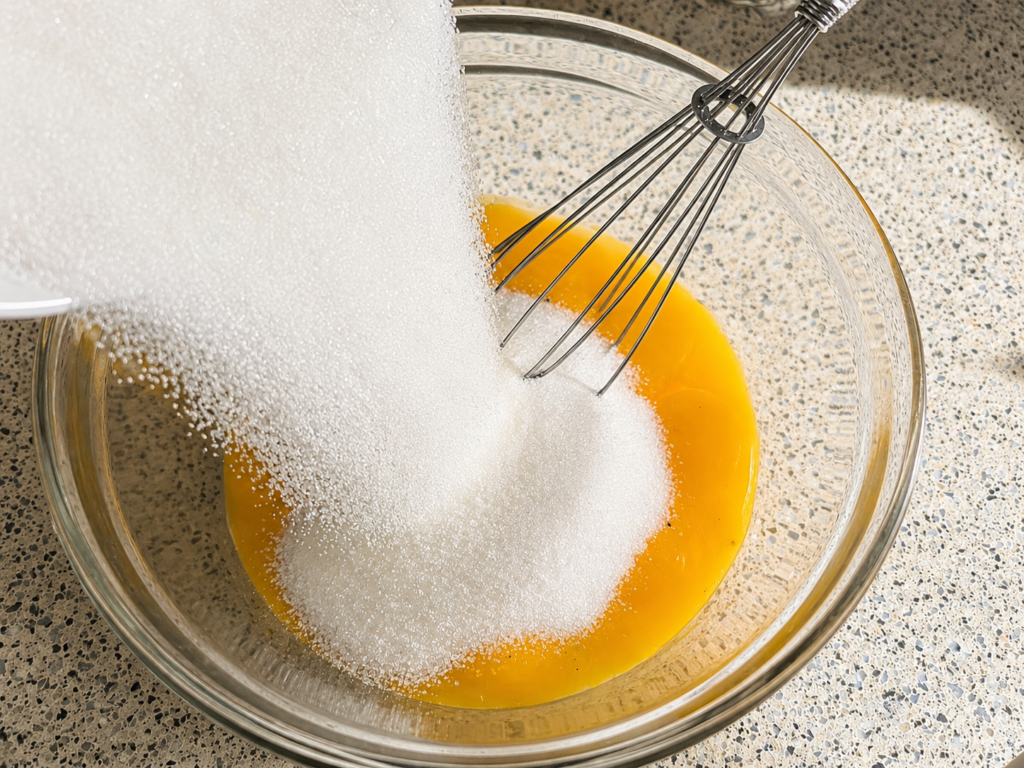
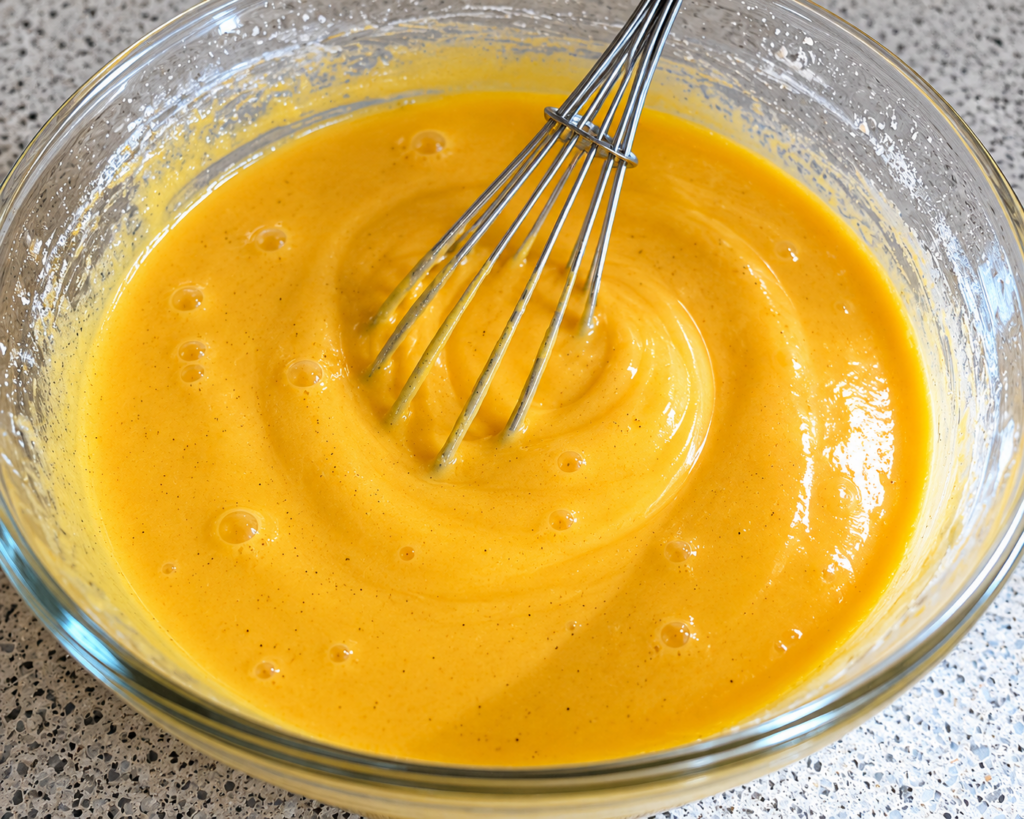
Whisk until the mixture becomes smooth, pale, and free from lumps. Gradually pour some of the warm milk into the egg mixture while whisking continuously. This helps loosen the mixture and prevents lumps from forming.
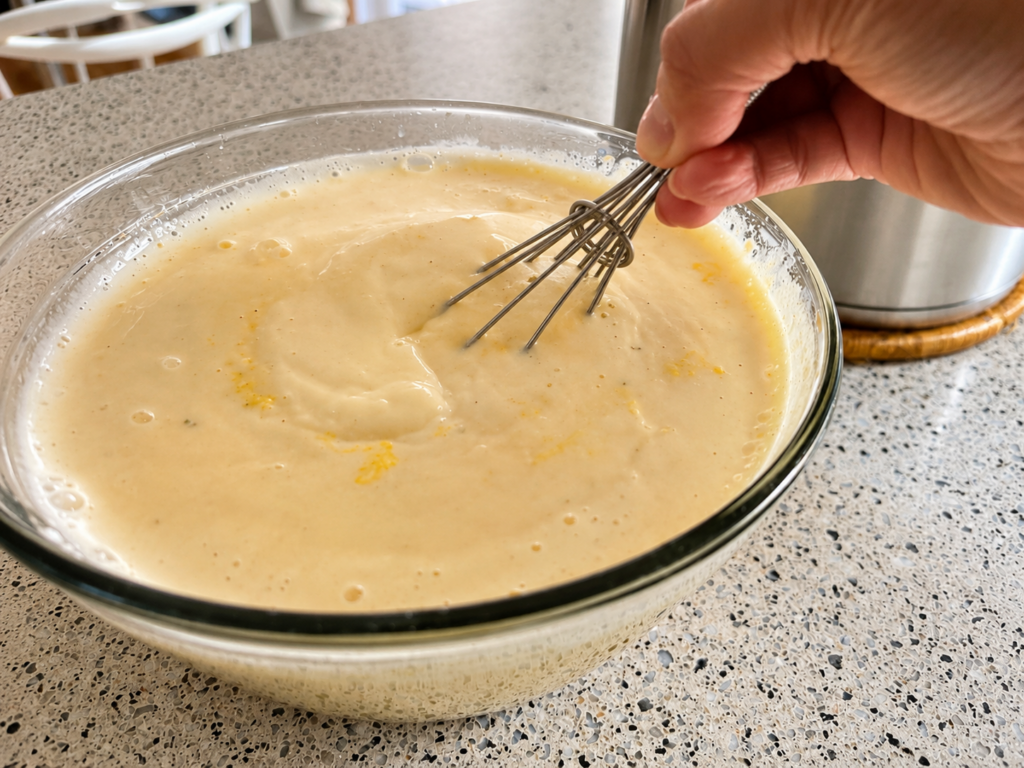
Once combined, pour everything back into the saucepan with the remaining milk.
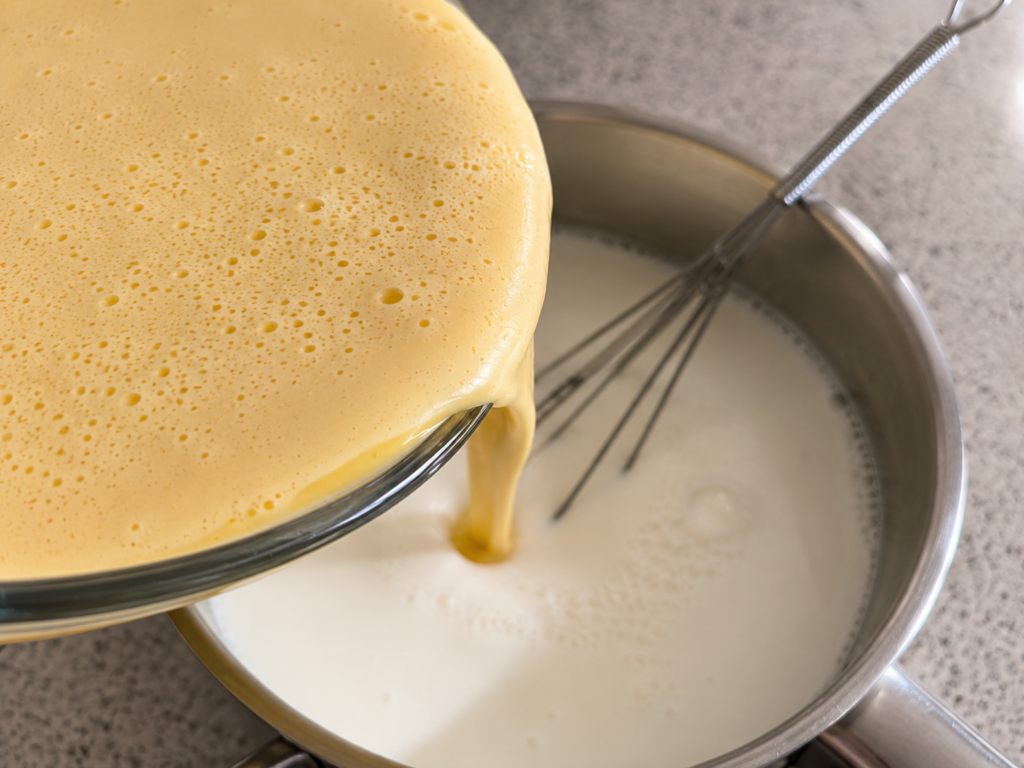
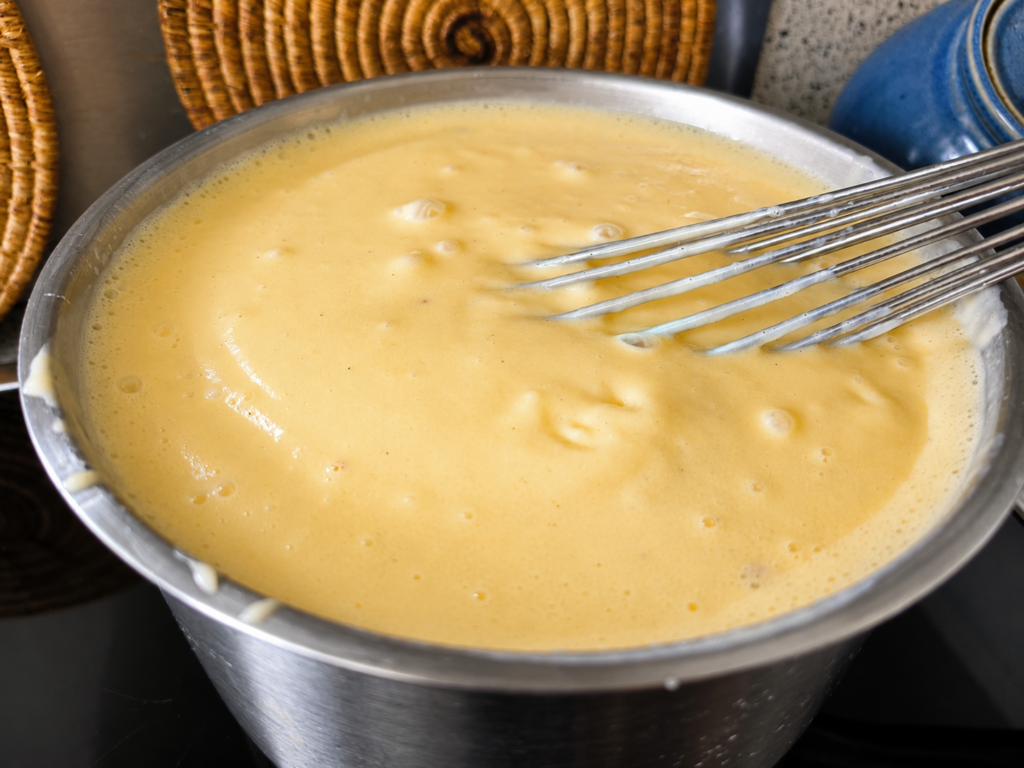
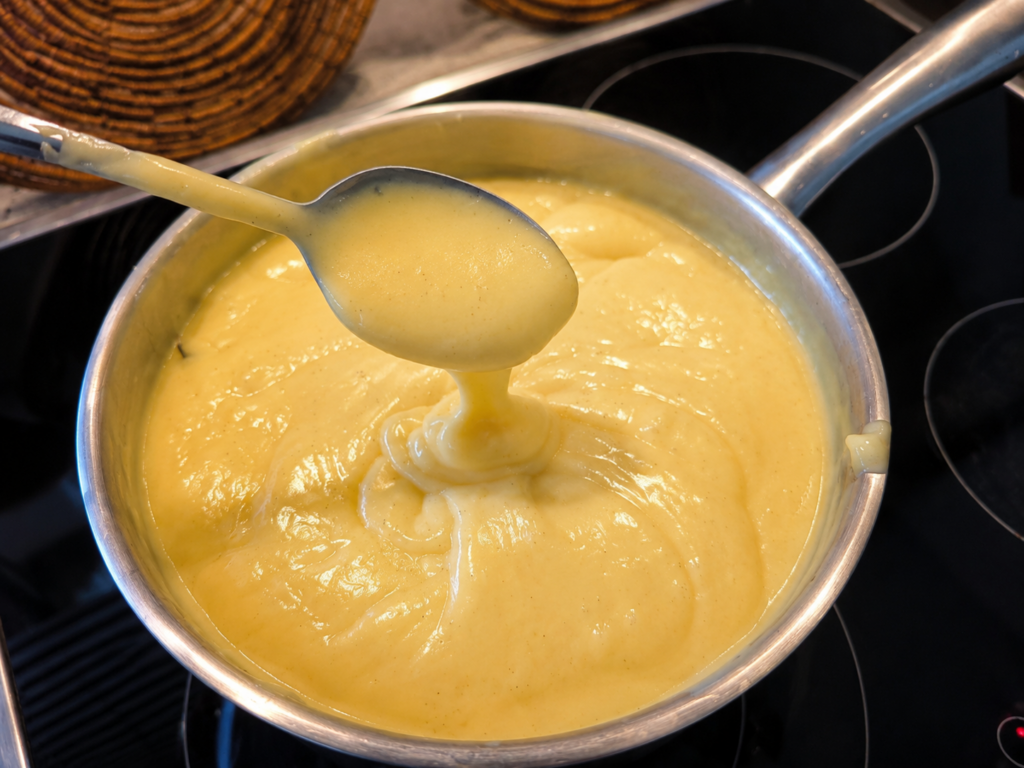
Cook over low heat, stirring constantly with a whisk, wooden spoon, or heatproof spatula. Continue cooking for about 30–60 seconds after the first gentle boil, stirring continuously. Remove from the heat immediately once the desired consistency is reached.
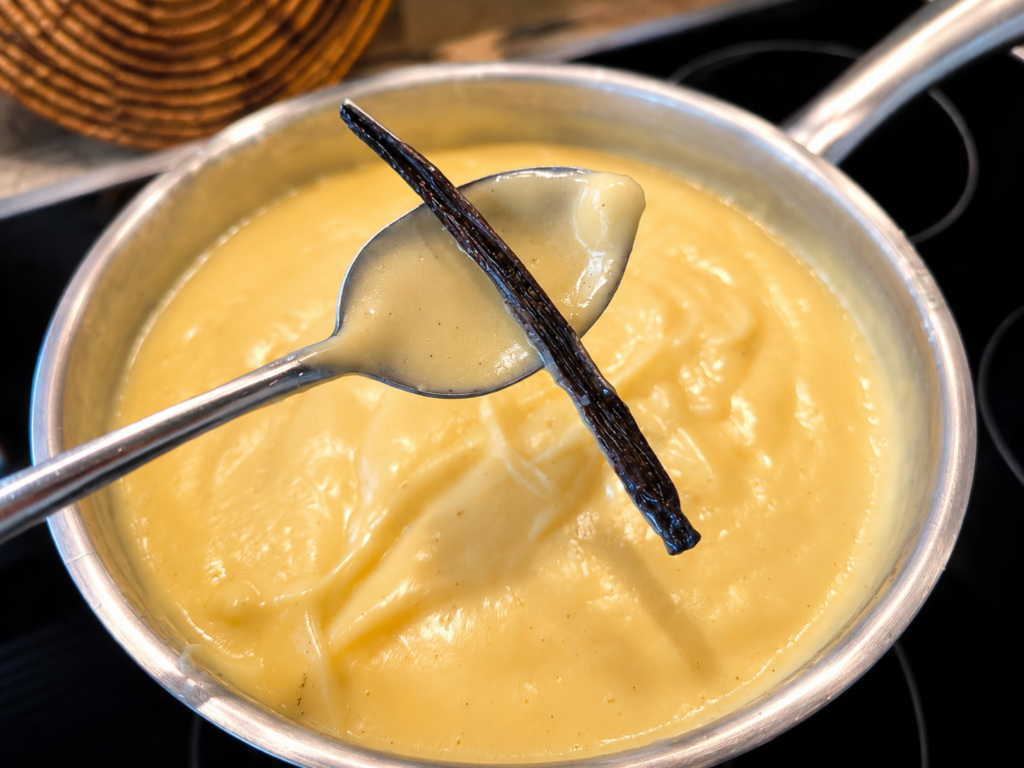
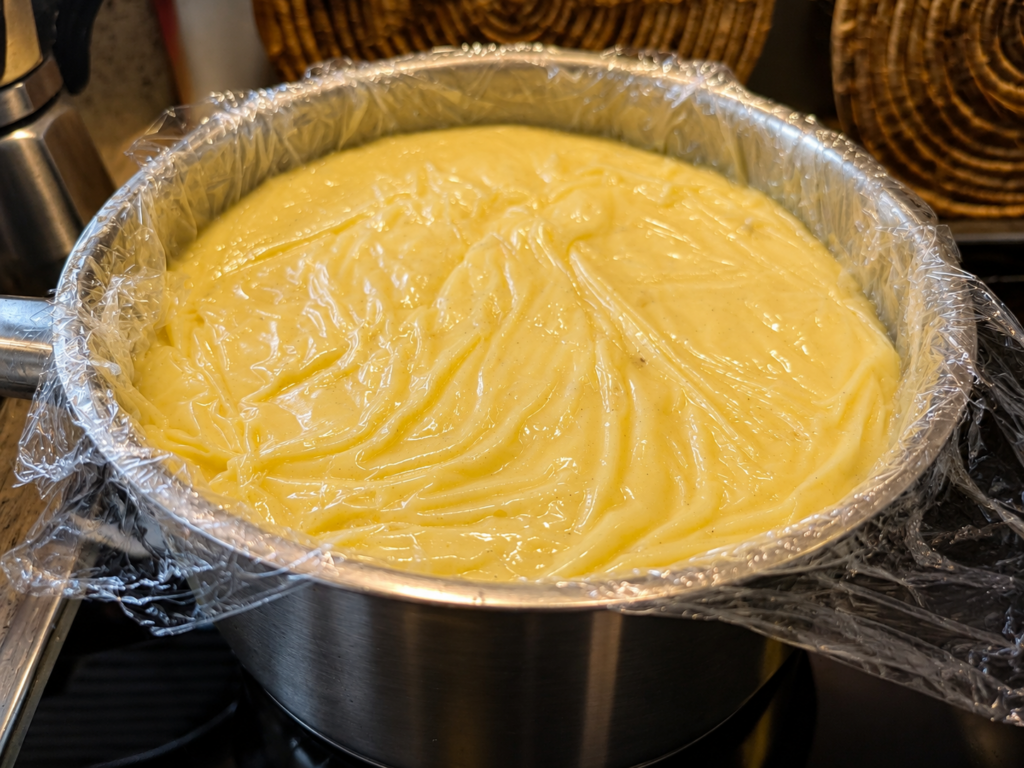
Transfer the crema pasticcera to a clean bowl and cover the surface directly with a double layer of plastic wrap, making sure it touches the cream. This prevents a skin from forming on top. Allow the cream to cool to room temperature. Once cooled, transfer it to an airtight container and store it in the refrigerator until needed.
Storage
Crema pasticcera can be stored in the refrigerator for up to 2–3 days.
Notes
- Cornflour produces a slightly firmer pastry cream, making it ideal for filling cakes, tarts, and pastries.
- Constant stirring is important to prevent the custard from sticking to the bottom of the saucepan and to ensure a smooth texture.
- The cream will continue to thicken slightly as it cools.
- This quantity is perfect for generously filling a large birthday cake or preparing several desserts.
Crema Pasticcera is proof that a few simple ingredients can create something truly special.
I hope this recipe finds its way into your kitchen, your celebrations, and perhaps even a few family memories of its own.
Thank you for reading and for being part of this journey.
If you’d like more Mediterranean-inspired recipes, traditional food stories, and evidence-based nutrition for the first 1000 days and beyond, I hope you’ll continue following along here at Little Brave Celery and on Instagram. Ciao!

